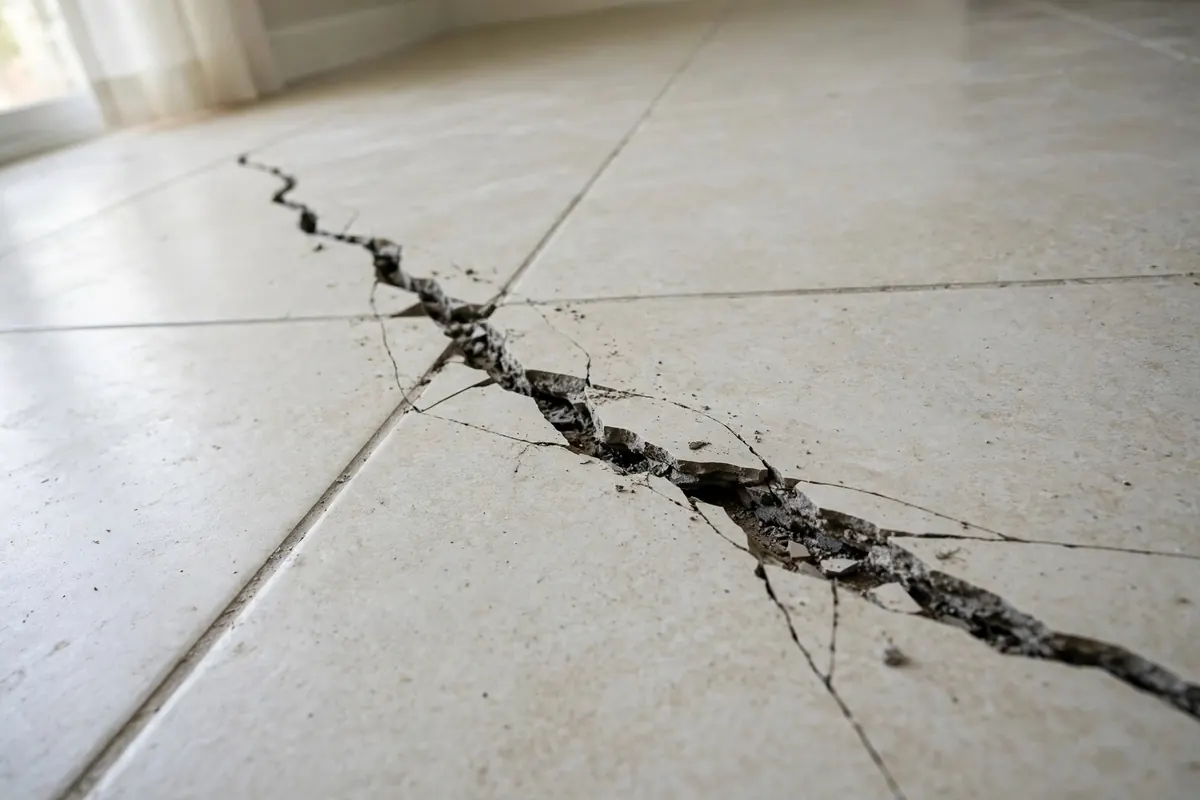
Fresh cracks in tile, grout, and drywall are the slab's way of reporting that the ground beneath it has changed. Water is a common reason why.
New or growing cracks in floors and walls can mean a slab leak is washing sand out from under the concrete, letting the slab settle unevenly. Leak cracks often arrive with company: a climbing water bill, a moving meter, dampness, or warmth. A pressure test rules water in or out before anyone talks about foundation work. Call Bradenton Slab Leak Pros at (941) 307-1712 to run that test first.
A concrete slab is only as stable as the ground packed beneath it. In Bradenton, that ground is sand over limestone, and sand has a weakness: moving water carries it. A pressurized leak under a slab does not just soak the soil, it transports it, grain by grain, away from the leak point and out along the water's path. Over weeks and months a shallow void opens under the concrete. The slab, designed to be supported everywhere, suddenly spans a gap, and concrete is poor at spanning. It settles into the void, tilts, or cracks where support ends.
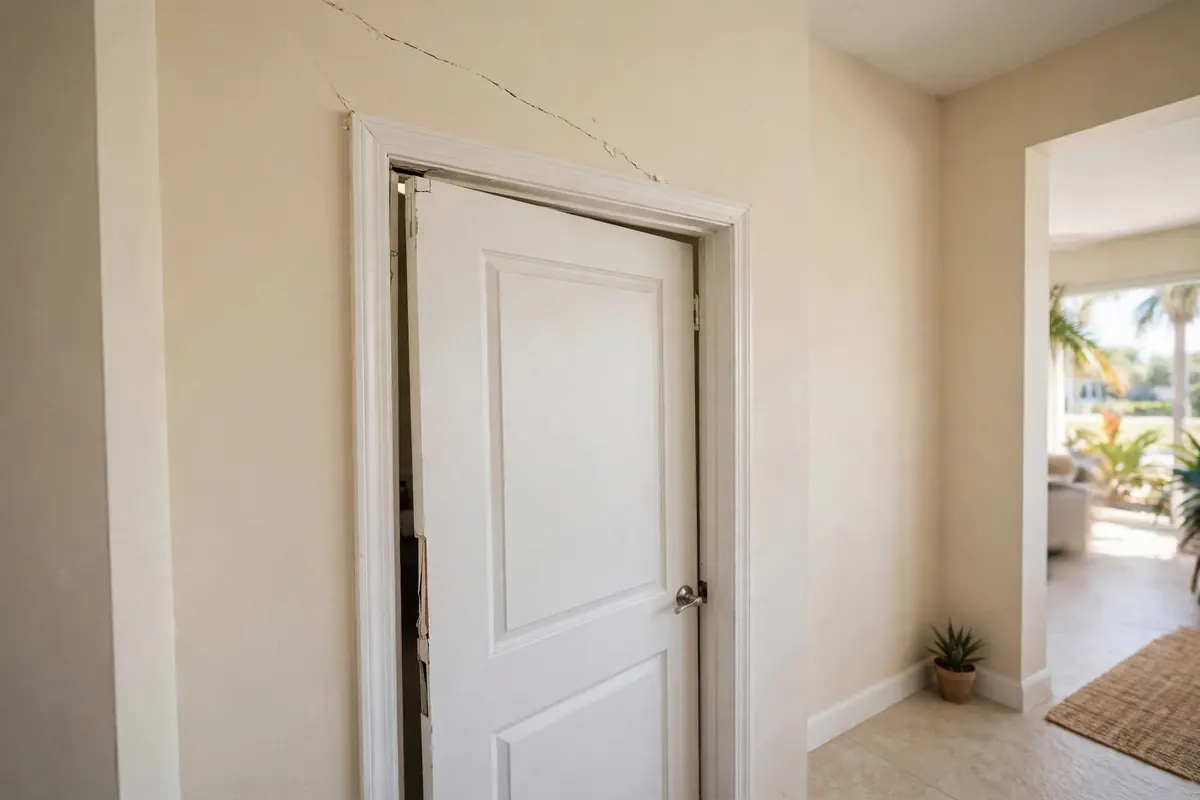
The cracks you see upstairs are the slab's settlement translated through the finishes. Tile and grout are rigid, so they crack early and visibly, often in a rough line across a room. Vinyl and laminate flex and may only show separated seams. Drywall above a settling section cracks diagonally from the corners of doors and windows, and the doors themselves begin to stick or swing on their own as their frames rack out of square. None of these signs requires the crack to sit directly over the leak; settlement tilts a whole section of slab, and the weakest finish in that section reports it.
Florida's seasons work both ends of the problem. Rainy season saturates the soil, which can temporarily swell and support the slab, then dry months let it shrink back, so leak related cracks often grow in steps across the year. The high water table across Manatee County means under-slab soil is rarely dry to begin with, and a leak adds a current to ground already wet. Soil loss in coastal Florida homes can proceed faster than the same leak would cause on dry inland ground.
The goal of these checks is evidence, gathered without disturbing anything. A dated record is worth more than a strong opinion.
Take a photo of each crack with a coin beside it for scale, and note the date. Repeat from the same position every few weeks. A crack that is measurably wider or longer in later photos is active, and active cracks in a home with any water sign deserve a pressure test.
Draw a short pencil line across the tip of each crack and write the date beside it. If the crack later extends past your mark, it is growing. This simple record separates a live problem from an old, stable scar better than memory ever will.
Cracks alone have many causes, but cracks plus a meter that moves with every fixture off narrow the field sharply. If the meter is still, water is less likely to be involved, and the crack conversation belongs to settling or soil. If it moves, find the leak before anything else.
Check the rooms over and around the cracked area for warm patches, damp baseboards, musty smells, and a bill that has been climbing. Leak cracks rarely travel alone. One companion sign is a hint; two or three together are close to a diagnosis.
Boundaries: do not fill, grout, or patch the cracks before water is ruled in or out, because a sealed crack hides the best monitoring tool you have. And do not break into the slab to look for washed out soil. If cracks appear suddenly, widen fast, or come with a floor you can feel sloping, skip the monitoring and call for the pressure test now.
Cracks become urgent when they widen visibly over days rather than months, when a floor develops a slope you can feel or a door suddenly jams hard, or when cracking arrives with flowing water signs like a spinning meter and damp floors. That combination suggests active soil loss happening now. Shut off the water if the meter is moving, and call (941) 307-1712 promptly.
The first instrument aimed at a cracked floor is not a saw, it is a pressure gauge. A pressure test on the supply system answers the threshold question: is water escaping under this home at all? If the system holds pressure, the cracks are a soil or settling matter and you have lost nothing by checking. If it drops, detection follows the loss to its source with acoustic and thermal tools, and the leak's position is compared with the crack pattern, because the two usually agree about which section of slab lost its support.
Order matters from there. The pipe is always repaired first, by Slab Leak Spot Repair, Pipe Rerouting, or lining, because filling or stabilizing soil while water still flows simply washes the new material away. With the leak sealed and pressure verified, our Foundation Leak Repair work addresses the leak's effects at the foundation edge and under the slab. Slab Leak Detection is the visit that starts the whole sequence.
Straight answers about this sign, before you call.
Describe the signs you are seeing and we will point you to the right next step.
Call (941) 307-1712Settling cracks usually appear early in a home's life, stay hairline thin, and stop changing. Leak cracks appear or grow years later, often follow a rough line across a floor, and arrive with water signs: meter movement, bill creep, warmth, or dampness. A pressure test settles the argument definitively, which is why we recommend it before any cosmetic repair.
Often, yes. Because the slab settles where soil support was lost, cracks tend to run across the settled section rather than sprinkle randomly, and tile cracks may step from tile to tile toward the unsupported area. Diagonal drywall cracks at door and window corners in the same part of the house are part of the same pattern.
Find the leak first, every time. Cosmetic crack repair over an active leak is money spent twice: the slab keeps moving while water runs, and the new crack will reopen along the same line. Once the pipe is fixed and the slab is stable, crack and flooring repairs have something solid to stand on.
Yes. The wall does not crack because of water inside it; it cracks because the floor and framing beneath it settled unevenly. Settlement tilts the whole section of the house, and drywall reports the tilt at its weakest points, which are the corners of openings, whether or not any plumbing runs nearby.
It depends on the leak's flow rate and the soil, but in Bradenton's sand a strong leak can undermine a section of slab within a single rainy season, and small leaks can take a year or more to announce themselves this way. Speed is exactly why the meter test matters: it finds the leak in minutes instead of waiting for the concrete to report it.
Every major warning sign in one guide, and the order a technician checks them in.
Damp carpet and lifting laminate with no spill above them mean water rising from below.
Leaks at the foundation edge and under the slab repaired before water undermines the soil.
Slab leaks flooding your Bradenton home found and fixed fast, day or night.
Rule the leak in or out before anyone talks about foundation work. Call for the pressure test first.
Call (941) 307-1712