

Galvanized Lines Under Palmetto Historic Streets
Palmetto grew up on the north bank of the Manatee River, and its oldest homes were plumbed for a different century. Galvanized steel pipe was the standard of its day, run under slabs and through walls across the historic district. Inside those pipes, decades of mineral buildup and rust have narrowed the passages and thinned the walls.
A galvanized line rarely fails all at once. It starts as a pinhole that weeps into the soil, then a second one a few feet away, because the whole run shares the same age and water chemistry. Palmetto homeowners often meet us after a patch elsewhere in the system, when the under-slab section finally becomes the weakest link.
That history changes how we approach a Palmetto leak. Finding the wet spot is only half the answer; the condition of the remaining galvanized run decides whether a spot repair is honest work or a short pause before the next failure. We test the whole line and show you the readings before recommending a path.
North of the Manatee River: How Palmetto Slabs Were Poured
Cross the Green Bridge from Bradenton and the housing tells the story of a river town: early 1900s frame homes near the water, mid-century blocks a few streets back, and newer subdivisions filling in along the US-41 corridor. Each era poured its slabs differently and buried different pipe, so a Palmetto leak call starts with the age of the street.
Older Palmetto homes often sit on shallow footings with lines that were never sleeved where they pass through concrete. Every small soil shift rubs pipe against that concrete edge. Newer homes have cleaner layouts but share the same sandy, river influenced ground, so settling still stresses fittings in the first years after construction.
Knowing which Palmetto era your home belongs to narrows the search before any equipment comes out. We ask about additions, re-pipes, and past repairs because the map of old and new pipe under a Palmetto floor is rarely the map the original builder drew. Surprises live in the undocumented middle years.
Snead Island and the Riverfront Water Table
Out on Snead Island and along the Palmetto riverfront, groundwater follows the Manatee River like a slow tide. Slabs in these neighborhoods sit close to saturated soil for much of the year, and a leaking line adds its flow to ground that has nowhere to put it. Moisture shows up at baseboards and slab edges sooner here.
Regatta Pointe Marina and the riverfront condos nearby share another trait: shared walls, stacked plumbing, and downstairs ceilings that report the upstairs unit leak. When water appears in a riverfront Palmetto home, we test your unit and the common lines separately, so the repair conversation starts with the right pipe and the right owner.
Riverfront soil also hides leaks in the opposite direction. A break under a Snead Island slab can drain straight into the wet ground and never show a puddle, leaving only the meter and the bill as witnesses. That is why we trust pressure testing over eyesight in every home near the Palmetto shoreline.
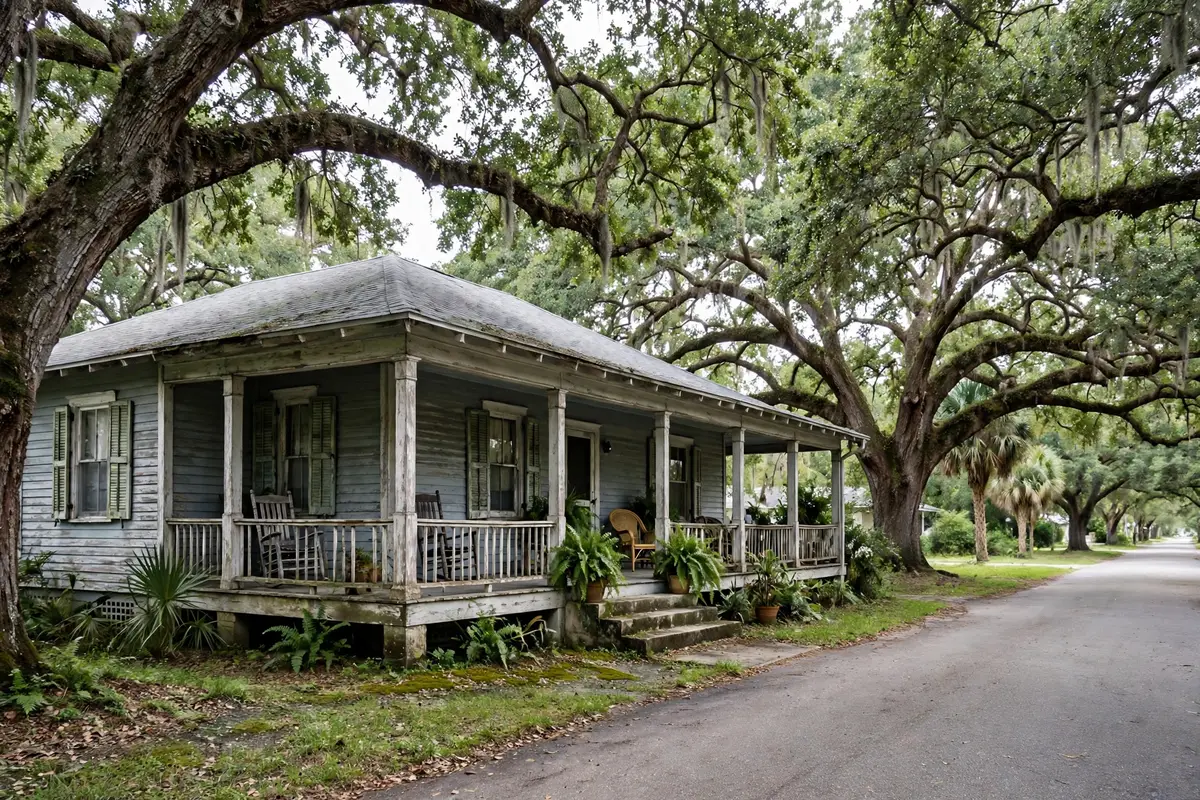
Early 1900s Homes Around Palmetto Historical Park
The streets near Palmetto Historical Park hold homes that predate modern plumbing codes, and many have been loved through a century of updates. Kitchens moved, bathrooms were added, and pipe routes were reinvented each time. A leak in one of these homes can sit under a floor that was a porch when the line was first buried.
Those layers of renovation are exactly why we trace lines electronically instead of trusting fixture positions. The pipe feeding a modern Palmetto kitchen may run diagonally under two older rooms. A tracer signal follows the real path, so the detection mark lands over the actual pipe, not over where a drawing says it should be.
Historic Palmetto floors deserve the same caution we give Sarasota terrazzo. Original wood and early concrete in these homes carry the character of the district, and rerouting a failing line through walls often protects both the floor and the budget. We present that option openly whenever the pinpoint sits under an irreplaceable surface.
Rust Tinted Water and Pinhole Leaks in Aging Steel Pipe
Palmetto homeowners with galvanized plumbing often describe the same prologue: water that runs faintly rusty after a vacation, pressure that fades at the far bathroom, flakes in an aerator screen. Those are corrosion symptoms, signs the inside of the pipe is shedding. A slab leak in that system is usually a chapter, not a surprise twist.
Pinhole leaks in steel pipe behave differently from a split copper line. They weep slowly, seal themselves with rust for a week, then reopen, which makes the meter test inconsistent if you only check once. We repeat isolation tests at different times of day in Palmetto homes so an intermittent weep cannot talk its way out of the results.
When testing shows a galvanized run failing at several points, the honest recommendation is usually to retire the whole under-slab section. A reroute leaves the old steel empty in the ground and gives the home a modern line with a clean start. We explain why, show the pressure numbers, and let the evidence make the argument.
The First Signs Palmetto Homeowners Actually Notice
In Palmetto the first sign is rarely water on the floor. It is a bill that climbs while the household routine stays the same, a water heater that rumbles at odd hours, or a patch of yard near the foundation that stays green and soft through a dry spell while the rest of the lawn goes thirsty.
Inside, look for baseboards pulling away in one room, a vinyl floor that feels spongy near a bathroom wall, or a musty corner that returns days after cleaning. Older Palmetto homes breathe through their floors more than sealed modern builds, so slab moisture often announces itself as smell before it ever shows as a stain.
Try the simple meter check before you call: turn off every fixture, skip the ice maker and irrigation, then watch the meter for movement over fifteen quiet minutes. If the dial creeps, something is losing water. Tell us the result when you call, and a Palmetto detection visit can start a step ahead.
Listening Through Old Concrete in the Historic District
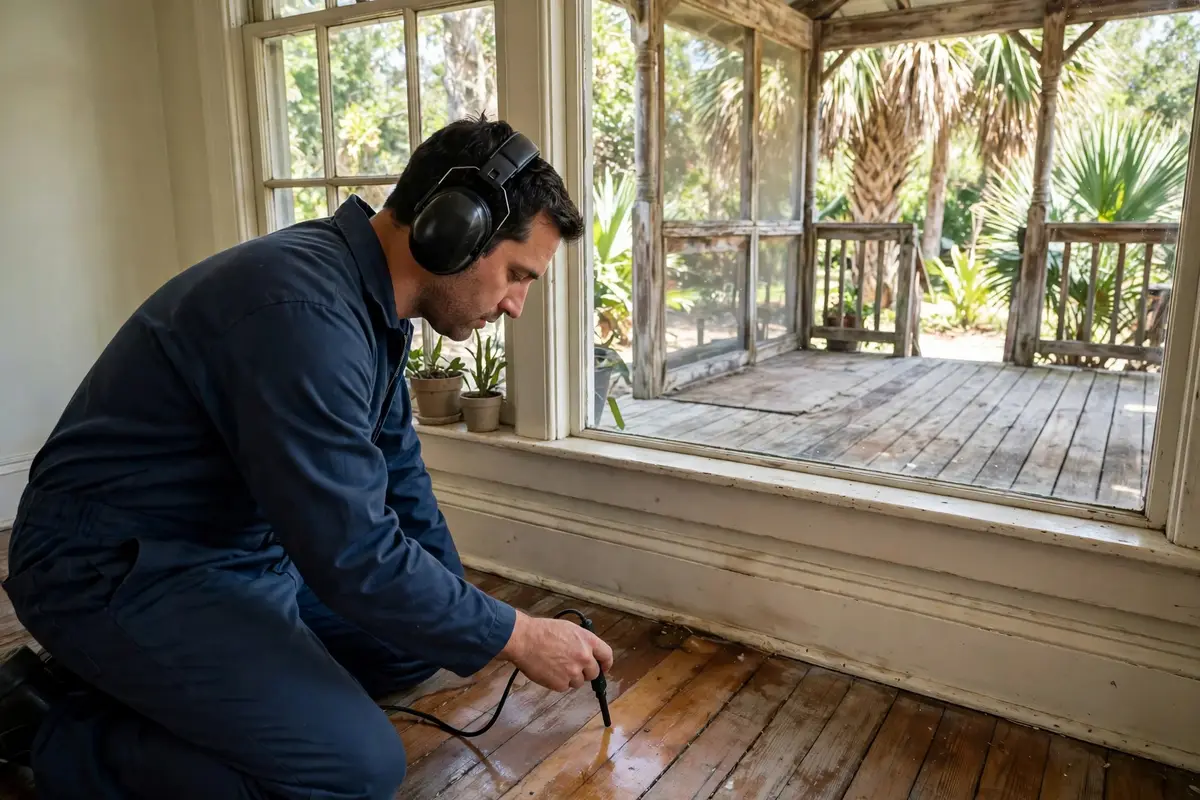
Detection in an older Palmetto home is an exercise in patience. Thickened slab edges, patched concrete from earlier repairs, and pipe that changes material mid-run all scatter sound. We work the floor in a grid with ground microphones, comparing signal strength point by point until one spot consistently outshouts the rest of the room.
Thermal imaging helps on hot water lines, though old concrete and layered floor coverings can blur the picture. In the historic district we treat the camera as a supporting witness and the acoustic reading as the lead, then confirm with a pressure drop test on the isolated line. Three agreeing tests earn the floor mark.
That care pays off in Palmetto more than anywhere else we work. A wrong cut in a century old floor is not a small mistake. When we finally mark the spot, it is because meter, sound, and pressure all point to the same square of concrete, and we can explain each reading to you in plain terms.
Repair Paths That Respect a Century Old Palmetto Home
A single break in a sound copper line under a Palmetto slab calls for a spot repair: a neat opening, a proper fix, and a concrete patch that sits level with the surrounding floor. We use it when testing says the rest of the run is healthy, and we will tell you when testing says otherwise instead of selling the smaller job.
For the many Palmetto homes still running galvanized under the floor, rerouting is usually the wiser spend. The new line travels through the attic or walls, the old steel is capped and drained, and no future failure can hide under your concrete again. It also pairs well with the phased updates these older homes often receive.
Epoxy lining suits select Palmetto lines that are round, intact, and leaking at joints rather than collapsing with rust. We camera or pressure verify suitability first. The through line of our advice stays simple: the condition of your specific pipe picks the method, and we show you that condition with test results, not opinions.
Along US-41: Mixed Eras, Mixed Pipe, One Careful Test
Head north along US-41 and Palmetto changes character block by block: postwar blocks, seventies ranches, small commercial strips, and new infill homes, all sharing one corridor. A slab leak on this side of town can belong to any plumbing era, so our first questions cover the build year, any re-pipe history, and past water quality complaints.
Seventies and eighties Palmetto ranches tend to run copper under the slab, and their leaks follow the familiar pattern of pinholes near bends where water changes direction. Infill homes fail differently, usually at a fitting stressed by settling. The detection tools stay the same; the interpretation leans on which era is under your floor.
Whatever the era, the visit ends with documentation: where the leak sits, what the line is made of, and which repairs were considered. Palmetto homeowners selling or inheriting these mixed era homes tell us the written findings settle arguments and insurance questions that a verbal summary never quite closes.
Summer Storms, River Levels, and Soil Washing Out Below
When summer storms stack up over Palmetto, the Manatee River rises, drainage ditches fill, and the soil under riverside slabs stays saturated for weeks. A pressurized leak in that season does double damage: it loses water and it carries fine soil particles away from under the slab, grain by grain, toward any lower pocket in the yard.
That washout is the quiet risk behind Palmetto slab leaks. Floors can look untouched while a void slowly opens below the concrete. We probe slab edges and listen for the hollow note that suggests missing support, and we flag it plainly if we find it, because soil questions belong in the open early.
Dry season tells the truth in Palmetto yards. When the rains stop and one strip along your foundation stays lush and soft while everything else browns, mark the spot and call. That strip is often the surface signature of an under-slab line that has been feeding it for months.
Inside a Palmetto Detection Visit, Step by Step
We start at the meter on the street, confirm the leak is real, and shut down the usual impostors: irrigation zones, toilet fill valves, water softeners, and hose bibs. In Palmetto, irrigation fed from the house line is a frequent false alarm, and clearing it early saves everyone an afternoon of chasing ghosts under concrete.
Next we isolate hot and cold, trace the line route electronically, and listen across the floors room by room. You can follow the whole process and ask questions as the readings narrow. When the pinpoint is confirmed, we talk repair paths with the evidence on the table and give you time to decide without pressure.
If you choose a repair, the opening happens only where the mark sits, the pipe work is pressure tested before the patch, and the concrete goes back clean. Palmetto homeowners get photos of the failed section when it comes out, because seeing the pinhole or the rusted fitting explains the whole story better than any summary.
Covering 34221 From Snead Island to Terra Ceia Road
All of Palmetto shares ZIP code 34221, but the housing inside it ranges from island cottages to farm edge homes toward Terra Ceia. We route across that whole spread daily, over the Green Bridge from our Bradenton base, so a Palmetto call is a local call in every way that matters to your schedule and your floor.
Terra Ceia side homes and the rural pockets north of the river often run longer service lines and wells or pumps in the mix. Tell us about any pump equipment when you call, because isolation testing changes when a booster or well system feeds the house. That one detail keeps the first visit accurate instead of exploratory.
Wherever your Palmetto home sits, the fastest start is the same: watch your meter for fifteen quiet minutes, note any warm or damp floor areas, and call with those observations ready. Good information at the curb means the detection gear comes out sooner and the floor mark lands faster.