Professional slab leak detection for Bradenton and Manatee County homes.
Slab leak detection locates water escaping from pipes beneath your concrete floor without tearing up the home to search. Technicians combine pressure testing, acoustic listening equipment, and thermal imaging to narrow the leak to a small, markable spot. Accurate detection protects your flooring and guides the right repair choice for Bradenton homes. Call (941) 307-1712
Finding a leak under several inches of concrete is a process of elimination guided by the right instruments. The visit begins with a pressure test that confirms a supply line is losing water and separates plumbing leaks from irrigation or fixture problems. From there, the technician works room by room, comparing moisture readings, floor temperatures, and sound levels. Each clue narrows the search area further. By the end, the leak is marked on the floor in a spot small enough for a direct repair, instead of a trench across the room.
Guessing is expensive in a slab home. Water surfacing at a baseboard may have traveled many feet along the top of the slab or through a gravel bed before appearing, so the wettest spot is often not the leak. Opening concrete in the wrong place costs a second opening, more patching, and more flooring work. Detection first means the repair plan rests on evidence: a confirmed line, a marked location, and a known pipe condition. Call (941) 307-1712 to schedule detection before anyone suggests cutting into your floor.
Bradenton housing makes detection skill especially valuable. Slab-on-grade construction dominates, from 1950s and 1960s ranch homes near the Manatee River to newer subdivisions off State Road 64. Many older homes have copper lines that have thinned with age, and some still have galvanized sections that corrode from the inside. Tile, wood, and luxury vinyl floors hide moisture differently, and an experienced technician reads each surface accordingly. Local knowledge of these building patterns speeds the search and improves accuracy on the first visit.
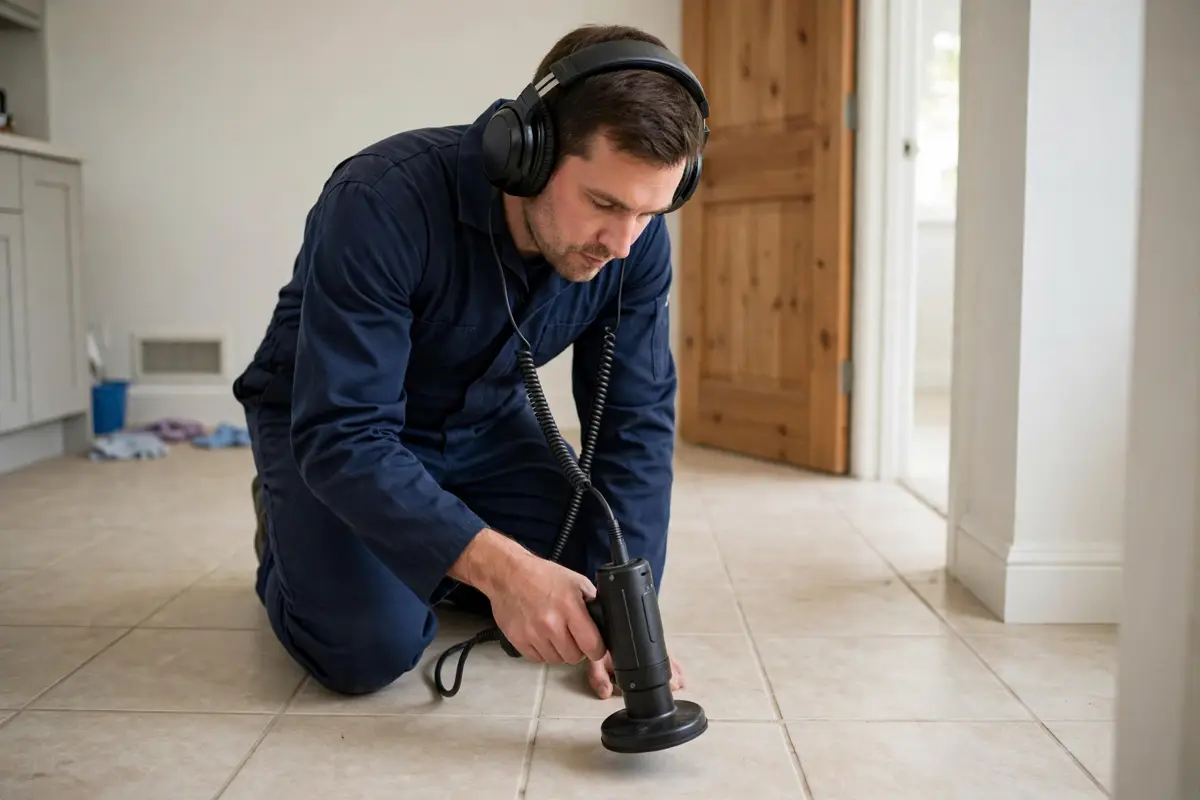
Pressurized water escaping a pipe makes sound, even through concrete. Acoustic listening equipment amplifies that sound so the technician can follow it along the line and identify where it peaks, which is usually close to the break. The process takes patience: appliances are silenced, water use stops, and readings are compared across a grid of points on the floor. Small leaks whisper rather than roar, so quiet conditions matter. Repeating the sweep from different angles confirms the location before anything gets marked in ink.
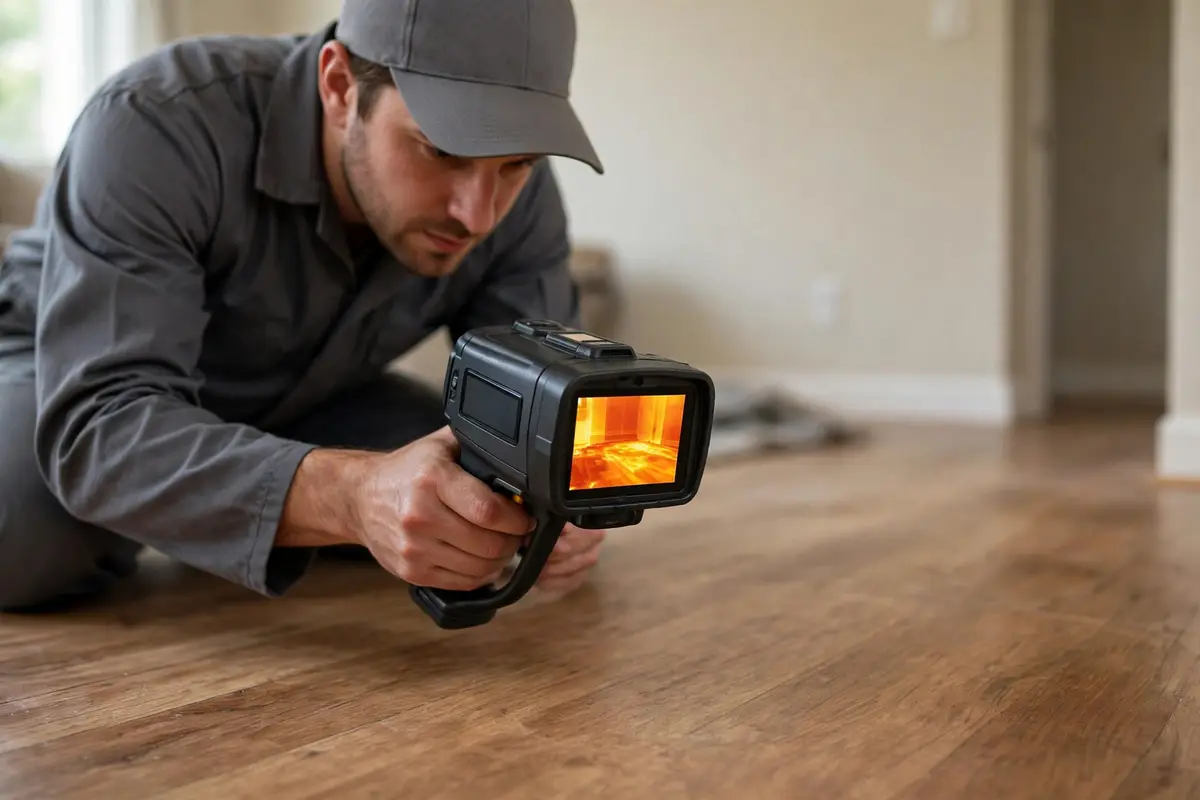
Thermal imaging adds a second layer of evidence, especially for hot water lines. A leaking hot line warms the concrete above it, and an infrared camera shows that warmth as a pattern the eye cannot see. The pattern reveals both the hot spot and often the path of the pipe itself, which helps plan the smallest possible opening. Cold line leaks are harder to image, but temperature differences from evaporating moisture can still outline the affected area. Used together, sound and heat cross check each other and cut down on false positives.
Moisture meters complete the picture at the surface. Pin and pinless meters measure moisture in flooring, baseboards, and lower drywall, showing how far water has spread from the source. That spread map matters for drying and for spotting secondary damage like swollen subfloor materials or mold prone wall cavities. It also helps separate an old stain from an active leak, since active moisture readings keep rising near the source. The combination of pressure data, sound, heat, and moisture gives you a location you can trust before repair decisions begin.
Every unnecessary square foot of opened concrete multiplies the finishing work that follows. A well located leak can often be reached through an opening just large enough to work in, leaving the rest of the floor untouched. That precision protects expensive tile patterns, continuous wood runs, and the concrete itself, which patches more cleanly when cuts are planned and minimal. It also shortens the repair, since the crew is fixing a pipe rather than hunting for one. Homeowners planning to sell also benefit, because a documented detection report shows the problem was handled carefully.
Accuracy also shapes the repair recommendation. Knowing exactly which line is leaking, and where, tells the technician whether the damage sits in a straight run, at a fitting, or near a previous repair. Fittings and joints fail differently from straight pipe, and corrosion at one elbow raises questions about the rest of the system. A precisely located single break in healthy pipe points toward spot repair. Signs of widespread deterioration point toward rerouting or lining instead. Detection is therefore not just a search step, it is the foundation of honest advice.
There is a soil reason for precision too. In Bradenton, water escaping under a slab washes fine sand away from the leak point, and knowing that point tells us where voids are most likely forming. A fast, accurate repair limits how much support the soil loses. Waiting while a leak runs, or cutting exploratory holes over several days, extends the washout window. If you suspect a leak, call (941) 307-1712 so detection happens while the affected area is still small and the repair choices are still simple.
The method combines staged testing with specialized instruments rather than a single magic tool. First, the meter test and pressure test prove that a pressurized line is losing water and rule out toilets, fixtures, and irrigation zones. Then acoustic sensors listen through the slab for the sound signature of escaping water, following it to its loudest point. Thermal cameras look for the warm trail of a hot line leak, and moisture meters map how far water has spread at the surface. Each result is checked against the others before a location is marked. Technicians also retest after marking, because a location that only holds up under one method is not ready to build a repair plan on. Pressure is raised and lowered, readings are repeated, and the mark is confirmed against the pipe route the locator traced. This verification step is brief compared with the cost of acting on a wrong location, and it is standard on careful detection work.
Experience fills the gaps that instruments leave. A technician who knows Bradenton construction can predict likely pipe routes in a 1960s ranch home, anticipate where fittings cluster, and recognize sounds that concrete transmits from elsewhere in the system. Pipe routes matter because sound travels along copper, and the loudest floor point can sit a short distance from the actual break. Correlating sound intensity across several points, then confirming with temperature and moisture, resolves that offset. The final mark reflects all of the evidence together, which is why careful detection rarely needs a second opening. Homeowners can help accuracy by keeping the house quiet during listening work, securing pets in another room, and pausing appliances that cycle water or vibrate. Mention any past leaks, previous repair locations, and additions built over the years, since additions often hide junctions where old and new plumbing meet. Those junctions are common leak points, and knowing they exist focuses the sweep where it matters most.
Once the leak is located, you get the findings in plain terms: which line is leaking, where the mark sits, how confident the location is, and what condition the surrounding pipe appears to be in. Then the repair options are laid out with their trade offs. A spot repair opens the slab at the mark and fixes the damaged section directly. Rerouting abandons the buried line and runs a new pipe through walls or the attic. Lining may suit certain pipe conditions without opening the floor at all. After the briefing, keep the detection report with your closing papers or home records, because it documents the condition of buried lines at a specific date. If you later sell, that record answers buyer questions honestly. If another leak ever develops, the report gives the next technician the pipe routes, materials, and test history, which shortens the second search considerably and protects your floors all over again.
You also receive guidance on drying and next steps for the home itself, including which flooring or wall areas should be checked as they dry. If soil washout is suspected near the leak point, that gets flagged for follow up once the pipe is fixed. Nothing proceeds without your approval of the plan, and the marked location stays visible for the repair crew. Detection turns a frightening unknown into a defined project with a beginning and an end, which is exactly what a stressful situation needs. Remember that a located leak in one line says nothing automatic about the others, and the report separates confirmed findings from general observations about pipe age. If testing suggests the remaining lines are also nearing failure, that is presented as planning information rather than pressure. You decide the scope and timing of any further work with the full picture in front of you and no concrete cut until you approve it.
Straight answers before you call.
Describe the signs you are seeing and we will point you to the right next step.
Call (941) 307-1712Most detection visits take a few hours, depending on home size, pipe layout, and how small the leak is. Very quiet leaks in large homes take longer because the technician must sweep more floor area and repeat readings. Straightforward leaks in smaller ranch homes are often located within a single visit without any concrete being opened.
Yes. The process isolates systems one at a time: irrigation zones are shut down, fixtures are checked, and pressure tests are run on the house supply lines separately. If the meter stops moving with irrigation off, the problem sits outside the slab.
Detection itself is non invasive. Sensors, cameras, and meters all work from the surface, and the only marks made are removable ink or tape at the located leak point. Floors are opened only during a repair you have approved, and only at the marked spot when a spot repair is chosen. Reroutes and lining may avoid floor openings entirely.
Small leaks are located by combining methods over more time. Pressure decay tests confirm the loss, sensitive acoustic equipment filters background noise, and thermal patterns are rechecked as the system runs. Tracer based methods can help in difficult cases. A slow leak still matters, since it runs around the clock and steadily washes sand from under the slab.
A high bill with no visible cause is one of the best reasons to schedule detection. The meter test alone can confirm whether water is being lost, and early location work is far simpler than waiting for flooring damage to appear.
Slab leaks flooding your Bradenton home found and fixed fast, day or night.
Electronic listening and correlation equipment that hears the leaks your ears cannot.
Hidden water leaks in walls, ceilings, and yards traced to their exact source.
A precise opening over the leak, a direct repair, and a clean concrete patch.
Call now and describe what is happening. We will take it from there.
Call (941) 307-1712