Professional electronic leak detection for Bradenton and Manatee County homes.
Electronic leak detection uses sensitive instruments to hear and measure leaks that eyes and ears cannot find. A leak noise correlator, ground microphone, electro-acoustic sensors, tracer gas, and a pipe and cable locator work together with sound filters to pinpoint escaping water under slabs, walls, and yards across Bradenton. Call (941) 307-1712
Electronic leak detection replaces trial and error with measurement. Instead of opening floors where water happens to surface, the technician deploys instruments that detect the physical signatures of escaping water: vibration, sound, heat, and gas movement. Each tool answers a different question, and the answers are combined into one confident location. For Bradenton homeowners, that means repairs start at the right spot and floors stay intact until the plan is set. Call (941) 307-1712 to book an electronic detection visit for a suspected hidden leak.
The core kit starts with a leak noise correlator and a ground microphone, supported by electro-acoustic sensors placed at valves, faucets, and exposed pipe ends. A pipe and cable locator maps where buried lines actually run, which matters in older Manatee County homes where records are incomplete and past repairs changed routes. Tracer gas equipment handles the quietest leaks, and sound filters clean up interference from air conditioners, traffic, and appliances. Together these tools cover pressurized supply lines under slabs, inside walls, and across yards.
Florida conditions make this technology especially useful. Sandy soil absorbs and muffles leak sounds, and the high water table means a leaking pipe may sit below groundwater, changing how sound travels. Slab-on-grade homes give water few visible escape routes, so surface clues are weak even when a leak is serious. Electronic methods read through those handicaps. In homes from the 1950s to the 1970s with aging copper and galvanized lines, pinpointing one failure precisely also reveals whether the rest of the system deserves trust or a broader repair conversation.
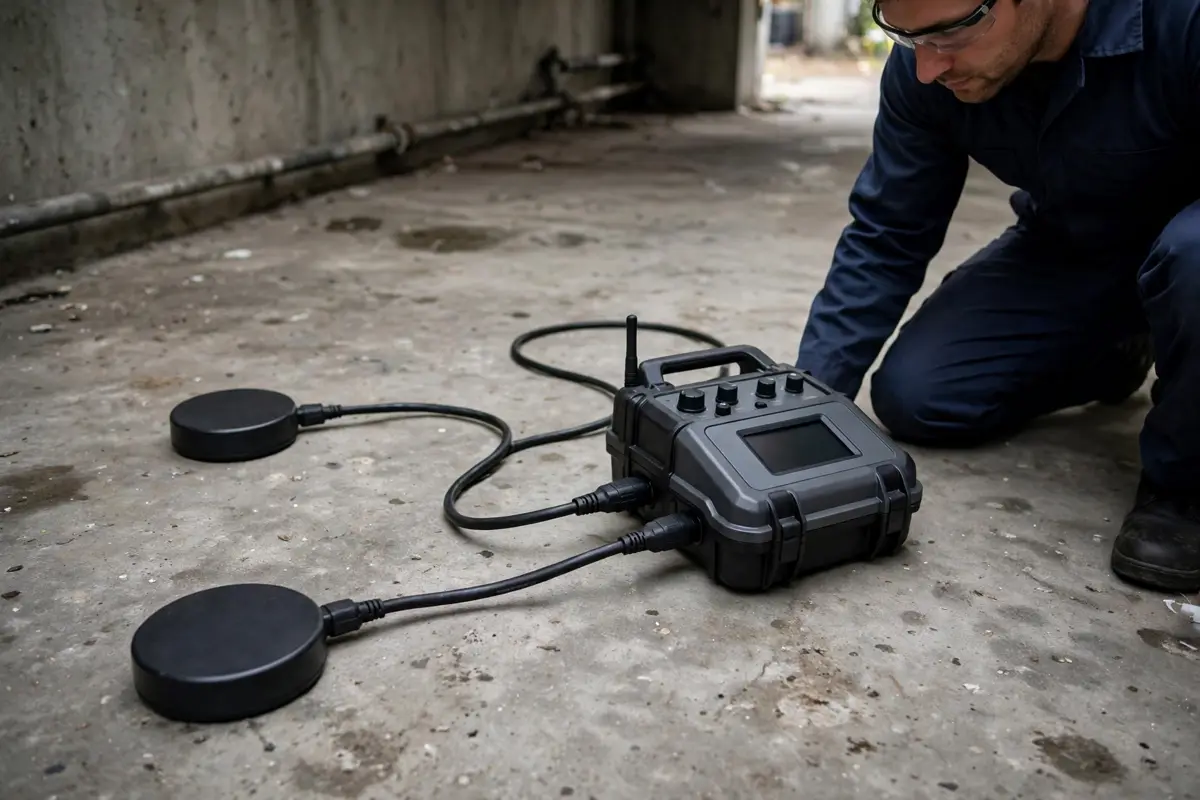
A leak noise correlator works by comparing sound arriving at two sensors placed on the same pipe at different access points. Escaping water creates a distinct noise that travels along the pipe wall and through the water itself. By measuring the time delay between the two sensors, the correlator calculates where along the run the noise originates. This is powerful on long straight runs, such as the line from the meter to a Bradenton home, where listening point by point would take far longer and give a less precise answer.
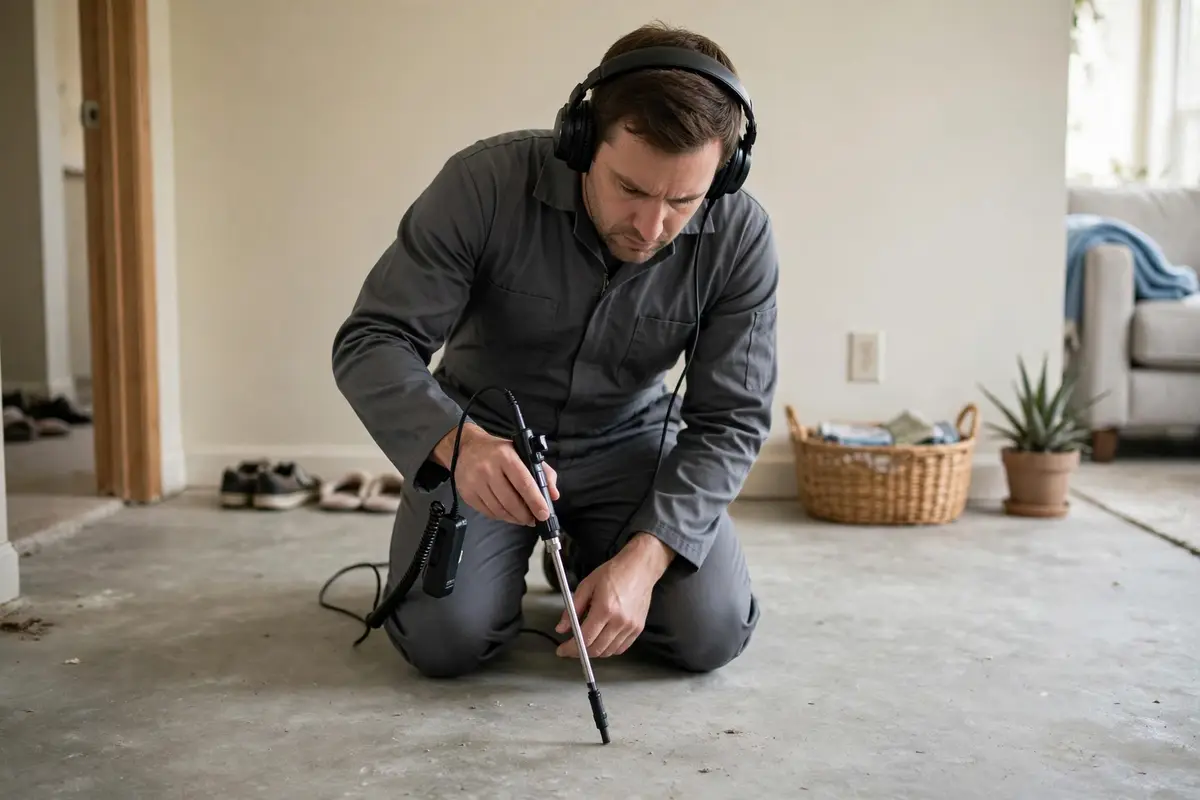
The ground microphone takes over at the surface. The technician moves it across the slab or yard in a grid, listening for the point where leak noise is strongest directly overhead. Electro-acoustic sensors amplify faint signals and apply sound filters that strip away low rumbles and electrical hum, leaving the hiss and vibration character of a leak. Readings are marked, compared, and repeated after pressure changes to confirm consistency. When correlator math and microphone results agree on the same spot, confidence is high.
Neither tool works well in careless hands. Sound travels along pipe and concrete, so reflections and branches can mislead a rushed operator into marking a point offset from the real break. Careful technicians cross check with the pipe and cable locator, verify the line route, and test at different pressures. They also account for irrigation lines and pool plumbing that share the yard. That discipline is what turns electronic data into a mark on the floor you can rely on when concrete cutting day arrives.
Some leaks are too small or too deep for sound alone. For those, tracer gas offers a different path: a safe, inert gas mixture is introduced into the isolated line, escapes through the break, and rises through soil and concrete where a sensitive detector sniffs it out at the surface. The highest gas reading marks the leak. This method shines on very quiet leaks, lines under thick slabs, and pipes surrounded by groundwater. It also helps when several small leaks hide along one deteriorated run of older pipe.
The pipe and cable locator plays a supporting role in almost every difficult case. By tracing the exact route of buried lines, it prevents wasted listening over floors where no pipe exists and reveals undocumented branches or abandoned sections. In Bradenton neighborhoods built over several decades, pipe routes often surprise even longtime owners. Knowing the route also shapes repair planning, since a leak at a fitting cluster suggests different work than a leak mid run. Locating first means every later step, from marking to repair, follows the real plumbing rather than an assumed layout.
Combining methods is standard practice rather than a last resort. A typical stubborn case might start with a correlator estimate, narrow with ground microphone sweeps, confirm the route with the locator, and finish with tracer gas verification before marking. Each method compensates for the blind spots of the others, and agreement between independent techniques is the strongest evidence available without opening the floor. If you have a leak that others could not find, call (941) 307-1712 and ask about a full electronic detection workup.
A leak noise correlator is an instrument that finds leaks by mathematics instead of by ear alone. Two sensors attach to the pipe at accessible points, such as valves or hose bibs, and record the sound of the leak traveling through the pipe. Because the leak sits closer to one sensor than the other, its noise arrives at slightly different times. The correlator measures that delay, combines it with the known distance between sensors and the sound speed for the pipe material, and calculates the leak position along the run. The calculation assumes sound travels at a predictable speed in the pipe, which is why the technician confirms pipe material before trusting the numbers. Copper, galvanized steel, and plastic each carry sound differently, and mixed systems are handled segment by segment. When the inputs are honest, correlation can place a leak along a long buried run with remarkable precision, and surface listening then verifies the exact point before marking.
Correlation is especially valuable where surface listening is difficult, including long yard lines, pipes under deep concrete, and noisy environments near busy Manatee County roads. Sound filters inside the unit remove repeating background noise so the leak signature stands out in the data. The result is a measured distance, not a guess, which the technician then verifies with a ground microphone at the surface. When both approaches converge, the marked spot carries the weight of two independent methods, and the repair opening can stay small and precise. Agreement between methods is also what protects you from the classic failure of leak work: the confident wrong hole. Every instrument has conditions that fool it, from pipe branches that split sound to groundwater that muffles it. Requiring two independent techniques to point at the same spot filters out most of those traps. The extra minutes spent verifying are the cheapest insurance in the entire repair process.
Yes, the same instruments that work through slabs also locate leaks inside walls and under yards, with technique adjusted for each setting. In walls, electro-acoustic sensors listen at fixtures and access points while moisture meters trace the damp path downward from the leak. In yards, the correlator and ground microphone follow the service line from the meter, and the pipe and cable locator keeps the search on the actual line rather than on irrigation piping or old abandoned runs that cross many Bradenton lots. For leaks in walls, the same patience applies: the technician works outward from the strongest readings instead of opening the first damp stud bay encountered. For yard lines, flagged routes keep sprinklers, roots, and neighboring utilities out of the search area. In both settings, the deliverable is identical: a specific, evidenced location and a clear statement of how it was confirmed, so the repair that follows is proportionate and precise.
Yard leaks deserve the same urgency as slab leaks in this region. A leaking service line in sandy soil can run for months, quietly eroding a channel, feeding standing moisture near the foundation, and inflating the water bill. Hurricane season storms and irrigation use mask the soggy evidence, so electronic confirmation matters. Once located, a yard leak is usually simpler to reach than a slab leak, but the locating principles are identical: measure first, dig once. That discipline protects landscaping, driveways, and the irrigation system from unnecessary exploratory digging. Keep the detection notes after the repair is done, because they describe your buried plumbing in unusual detail: routes, materials, access points, and the exact repair location. Future plumbers, remodelers, and landscapers all work better with that map in hand. It also settles questions quickly if a different line ever leaks, since the new search starts from documented facts rather than from memory or guesswork.
Straight answers before you call.
Describe the signs you are seeing and we will point you to the right next step.
Call (941) 307-1712Electronic detection relies on instruments that measure sound, vibration, and gas movement rather than surface clues alone. A correlator calculates leak position from timing data, ground microphones amplify faint noise, and tracer gas reveals leaks too quiet to hear.
Yes. The tracer mixtures used for leak detection are inert, non toxic, and introduced only into the isolated section of pipe being tested. The gas escapes through the leak and dissipates at the surface in tiny amounts detected by sensitive equipment.
Plastic pipe carries leak sound less efficiently than metal, which makes listening harder but far from impossible. Technicians compensate with tracer gas, pressure based testing, sensitive electro-acoustic sensors placed closer to the line, and careful route location.
Accuracy depends on correct sensor placement, knowing the true distance between sensors, and using the right sound speed for the pipe material. With those inputs verified, a correlator typically narrows the leak to a short section that surface listening then confirms. The final mark is never based on the calculation alone, which is why verified electronic locations rarely miss.
Usually, yes. Visible water shows where moisture surfaced, not where the pipe broke, and in slab homes those points can be many feet apart. Electronic location work is brief compared with the cost of opening concrete in the wrong place. Confirming the exact break first keeps the repair small, protects your flooring, and speeds up the entire job.
Slab leaks flooding your Bradenton home found and fixed fast, day or night.
Under-slab leaks pinpointed with acoustic and thermal tools before any concrete is cut.
Hidden water leaks in walls, ceilings, and yards traced to their exact source.
A precise opening over the leak, a direct repair, and a clean concrete patch.
Call now and describe what is happening. We will take it from there.
Call (941) 307-1712