

Sarasota Slab Leaks Start With Sand, Salt Air, and Aging Copper
Sarasota homes sit on sandy soil a short distance from Sarasota Bay, and that ground never quite stays still. Sand shifts after heavy rain, the water table rises and falls with the season, and copper lines buried under a slab flex a little with every cycle. Over decades, that slow movement wears pipe walls thin at bends and joints.
Our Sarasota calls rarely begin with a flood. They begin with a water bill that jumped for no clear reason, a section of floor that feels warmer than the rest, or a faint hissing behind a quiet wall. Those small clues usually mean a pressurized line under the concrete has opened up and is losing water into the ground.
Because Sarasota mixes century old bungalows with brand new construction, no two leak jobs here look alike. The detection approach has to match the era of the home, the pipe material under the floor, and the flooring on top of it. That local read is what keeps a small opening in the concrete from turning into a whole room demolition.
Rosemary District Bungalows and Downtown Classics
The Rosemary District and the streets around downtown Sarasota hold some of the oldest housing in our service area, including 1920s bungalows that have been renovated many times over. Each renovation layered new pipe over old, and the lines that remain under those slabs are often a patchwork of copper, galvanized steel, and later plastic repairs.
In these homes, a slab leak can hide for months because the original floors breathe differently than modern tile. Moisture wicks into old wood, baseboards swell near the Ringling College end of the district, and a musty smell in one room becomes the only warning. We test the whole system rather than trusting any single symptom.
Owners of historic Sarasota properties also care about what a repair does to original materials. Terrazzo, heart pine, and early tile cannot simply be reordered, so pinpoint accuracy matters more here than anywhere. We mark the exact leak location before anyone talks about opening a floor, and rerouting often wins over cutting.
Sarasota Bay Humidity and a Water Table That Sits High
Close to the bay and around St. Armands Circle, groundwater can sit just a few feet below a slab for much of the year. A leaking line in that zone does not drain away quietly. Escaping water meets groundwater, saturates the sand under the home, and can start washing fine soil out from beneath the concrete edges.
That is why a Sarasota slab leak near the water deserves a faster response than the visible damage suggests. The floor may show only a faint damp patch while the soil below is already softening. Early detection protects the slab itself, not just the flooring, and keeps a plumbing problem from becoming a foundation conversation.
Salt air plays a slower role. It corrodes exposed fittings in garages and utility areas, and the same chemistry attacks pipe where concrete cover is thin. When we find one corroded section in a bay side home, we pressure test the entire run, because neighboring sections of the same age rarely stay far behind.

Gulf Gate Ranches and the Mid-Century Building Boom
Gulf Gate and the neighborhoods around it grew during the mid-century boom, when ranch homes went up fast on concrete slabs with copper water lines set right into the pour. Those lines are now well past the age where pinhole leaks surprise anyone. The calls cluster on whole streets because the homes, and their plumbing, share a birth year.
Mid-century Sarasota slabs often hide their leaks under terrazzo, a floor that telegraphs temperature beautifully. A hot water leak under terrazzo creates a warm trail you can map with your bare feet, and our thermal cameras follow that same trail to the source. Cold line leaks stay quieter and show up first on the meter.
Many Gulf Gate homes have also added rooms over the years, sometimes over the original line paths. A leak beneath an addition complicates access, so we trace the full route of the pipe before recommending a repair. Knowing where the line actually runs turns a guessing game into a short, planned opening.
Warm Tile Toward Siesta Key and Other Signs Sarasota Owners Report
Homeowners heading toward Siesta Key and the barrier island bridges describe a familiar set of clues. One patch of tile near the kitchen stays warm overnight. The water heater cycles when nobody has showered. A section of laminate starts to cup, or the pool level drops a little faster than evaporation explains on a breezy week.
Second home owners hear about Sarasota slab leaks differently: a neighbor notices the meter spinning, a house watcher finds a damp closet, or a utility bill arrives that dwarfs the winter months when the home sat empty. A leak under a vacant home can run for weeks, which is why we treat island area calls as time sensitive.
Not every warm floor is a leak, and not every bill spike comes from under the slab. Sprinkler breaks, running toilets, and pool equipment all imitate the same signs. Our first job in Sarasota is separating a true under-slab failure from those lookalikes with meter isolation and pressure testing, before any repair plan is discussed.
Phillippi Creek Rains and Ground That Moves With the Season
Phillippi Creek drains a huge share of Sarasota, and homes along its banks feel every rainy season surge. Soil swells when it is saturated and shrinks back in the dry months, and rigid pipe under a slab cannot follow that movement forever. Joints stress, supports shift, and a line that held for thirty years starts to weep.
Storm season adds another wrinkle: heavy rain can mask a leak completely. Lawns are wet everywhere, drainage is running, and one more damp area near the foundation draws no attention. We often find Sarasota leaks in October that started in July, once the ground dries and the wettest patch near one home refuses to dry with it.
If your Sarasota home sits near the creek or in a low pocket that puddles after storms, treat a rising water bill as a soil question as well as a plumbing one. We check for washout at the slab edge and soft spots in the yard that trace the path water takes once it escapes the pipe.
How Thermal Imaging Reads a Sarasota Floor
Detection in a Sarasota home starts at the meter, where we confirm that water is moving with every fixture shut off. Then we isolate hot and cold sides of the system, because the tools and the repair differ by line. Only after that do the acoustic sensors and thermal cameras come out onto the floor itself.
A hot water leak paints a plume on a thermal camera, a warm bloom spreading through the concrete from the break point. Cold leaks stay invisible to heat, so we listen instead: pressurized water escaping under a slab makes a distinct sound, and ground microphones triangulate it across the room until the strongest signal marks the spot.
The goal is a mark on the floor you can cover with one hand. In a Sarasota home with original terrazzo or custom tile, that precision is the whole job. We confirm the location with a second method before anyone cuts, because a verified pinpoint is what keeps the repair small and the floor story short.
Spot Repair, Rerouting, or Lining: Matching the Fix to the House
Once a Sarasota leak is pinpointed, three repair paths cover nearly every case. A spot repair opens the slab directly over the break and fixes that section, which suits a single failure in otherwise sound pipe. It is the smallest job when the rest of the line tests clean and the floor above can be patched well.
Rerouting abandons the buried line and runs a new one through walls or attic space instead. For Rosemary District bungalows with fragile floors, or any home on its second under-slab failure, rerouting ends the cycle of cutting concrete and leaves the old pipe capped and out of service under the slab.
Epoxy lining rebuilds the inside of the existing pipe where the line is structurally intact but leaking at joints or pinholes. We walk Sarasota homeowners through all three options with the test results in hand, because the right choice depends on pipe condition and floor value, not on which job is quickest to sell.
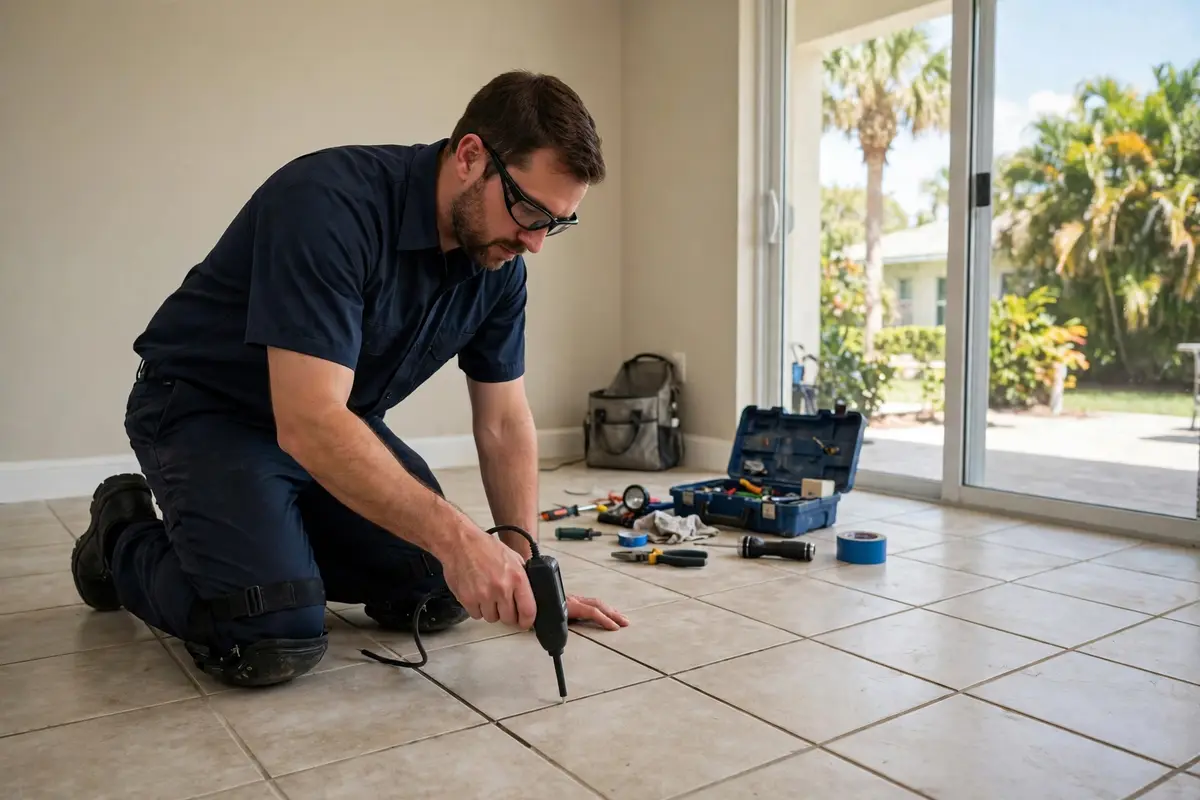
Protecting Terrazzo, Hardwood, and Sarasota Floors Worth Keeping
Sarasota interiors lean heavily on floors that carry the value of the room: polished terrazzo in mid-century homes, wide plank wood in renovated bungalows, large format tile in newer builds toward the east side. A slab repair plan that ignores the floor is only half a plan, so flooring drives our method choice from the first visit.
When a spot repair is the right call, we cut a controlled opening, protect surrounding surfaces, and remove dust at the source. When the floor is irreplaceable, we say so plainly and push the reroute option, even though it takes more planning. Honest advice about your floor is part of what a Sarasota detection visit should deliver.
After the pipe work, the concrete patch goes back level and ready for your flooring contractor, and we document the leak location and repair for your records. That paperwork matters in Sarasota, where homes change hands often and a documented repair answers the next buyer questions before they are asked.
What a Detection Visit Looks Like on a Sarasota Street
A Sarasota visit starts with your observations: when the bill changed, where the floor feels warm, what the meter does overnight. Then we run our own meter test and walk the home with you, checking the water heater, toilets, irrigation, and pool equipment that so often imitate a slab leak in this climate and housing mix.
If the evidence points under the slab, detection follows in the same visit whenever the layout allows. You will see the floor marked, hear the reasoning out loud, and get the repair options explained with the actual test readings beside them. No digging happens on a hunch, and no floor opens before the location is confirmed twice.
Most Sarasota homeowners are surprised by how contained the process feels. The equipment is quiet, the footprint is one room at a time, and you stay in the home while we work. By the end of the visit you know where the problem sits, what caused it, and which repair path fits your house and floors.
Newer Builds East of I-75 Are Not Immune
It is tempting to assume a Sarasota home built this century sits safely on modern plumbing, but our call log disagrees. Newer subdivisions east of I-75 still produce slab leaks, usually from construction era issues: a line nicked during the pour, a fitting stressed by settling fill, or a pipe run chafing against concrete at a tight bend.
The good news in newer homes is documentation. Floor plans, builder plumbing layouts, and manifold systems in many recent builds make tracing lines faster and detection cleaner. The bad news is finish level: engineered wood and open plan tile fields raise the value of a precise pinpoint just as much as any historic floor downtown.
If your newer Sarasota home shows a bill spike or a damp baseboard, do not let the age of the house talk you out of a test. A meter check takes minutes and settles the question. Early leaks in newer construction are usually single point failures with a single point repair, caught before soil washout complicates them.
Sarasota Routes From the Rosemary District to the County Line
Our Sarasota coverage runs the full spread of the city, from downtown and the Rosemary District through Gulf Gate, along the Siesta Key approaches, and east past I-75 into the newer subdivisions. ZIP codes 34230 to 34243 cover a lot of ground, and we route Sarasota detection calls daily rather than as an occasional trip south.
That routing matters when a leak is active. A home losing water under the slab near Payne Park or out toward Bee Ridge does not benefit from a crew dispatched from across the region. Local routing means the meter test, the detection gear, and the repair conversation happen while the problem is still the size you first noticed.
Sarasota homeowners can also help us help them faster: note which rooms feel warm, photograph the meter reading morning and evening, and keep pets clear of the work room. Small details like that shave real time off a detection visit, and they cost you nothing but a minute with your phone.