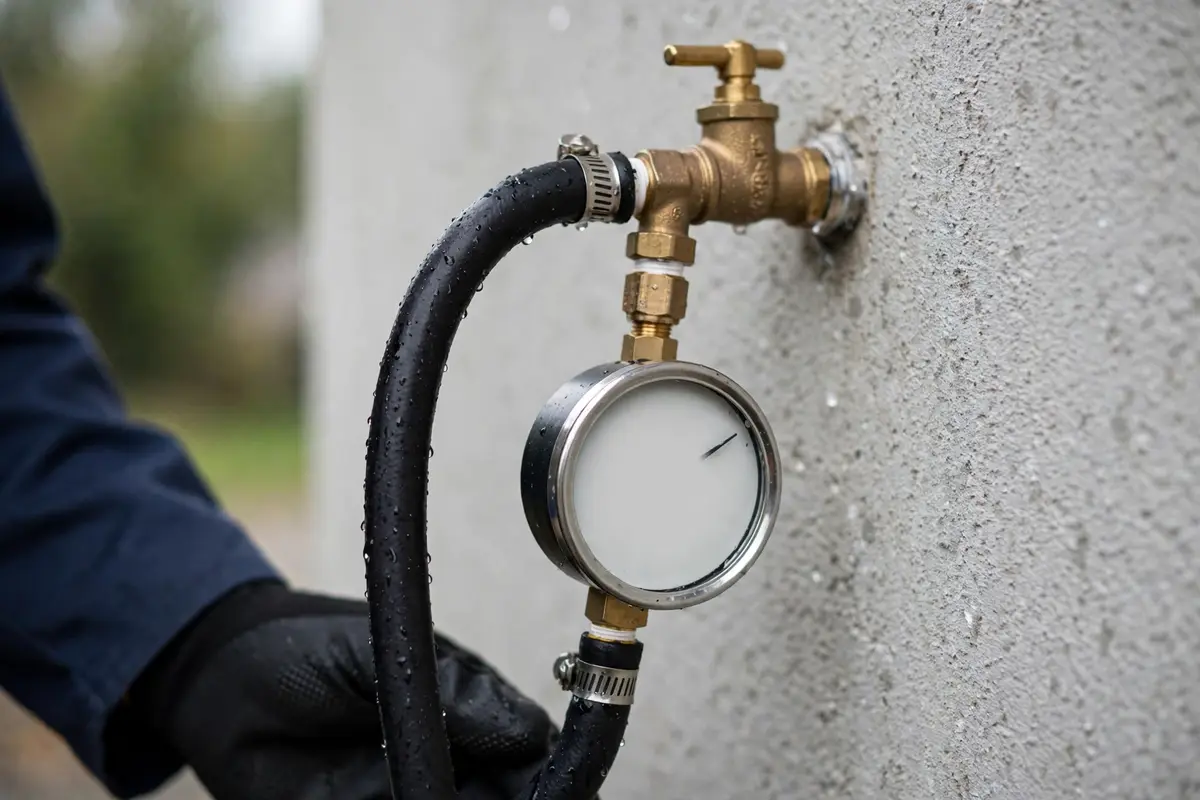
Professional leak prevention inspection for Bradenton and Manatee County homes.
A leak prevention inspection checks your plumbing before a hidden leak becomes water damage. The visit covers a pressure check of the supply system, meter monitoring for silent losses, fixture and water heater checks, and preparation advice for Florida rainy season in Bradenton homes with aging under slab lines. Call (941) 307-1712
Most slab leaks are discovered by the damage they cause, which means they ran for weeks or months before anyone knew. A leak prevention inspection flips that sequence: it examines the plumbing while everything still looks fine, looking for the early evidence of leaks and for the conditions that produce them. Pressure behavior, meter behavior, fixture condition, and the state of accessible pipe are all reviewed in one visit. For Bradenton homes with decades old lines under the slab, that early look is the difference between prevention and repair.
The inspection is built for local risk factors. Manatee County homes sit over a high water table on sandy soil, so even a small leak erodes support and spreads moisture quickly once it starts. Many homes built from the 1950s to the 1970s still run original copper or galvanized lines that are reaching the end of their natural service. Hurricanes stress buried plumbing, and irrigation systems add their own leak potential. An inspection tuned to those realities checks the places Bradenton plumbing actually fails, not a generic checklist imported from elsewhere.
Homeowners use the findings in practical ways: a clean report for peace of mind or a home sale, a watch list of aging components to plan around, or early repairs scheduled on their own terms instead of during an emergency. Catching a weeping valve or a drifting pressure problem is vastly simpler than drying a slab. Call (941) 307-1712 to schedule an inspection, especially if your home has never had its buried lines assessed or has a history of plumbing surprises.
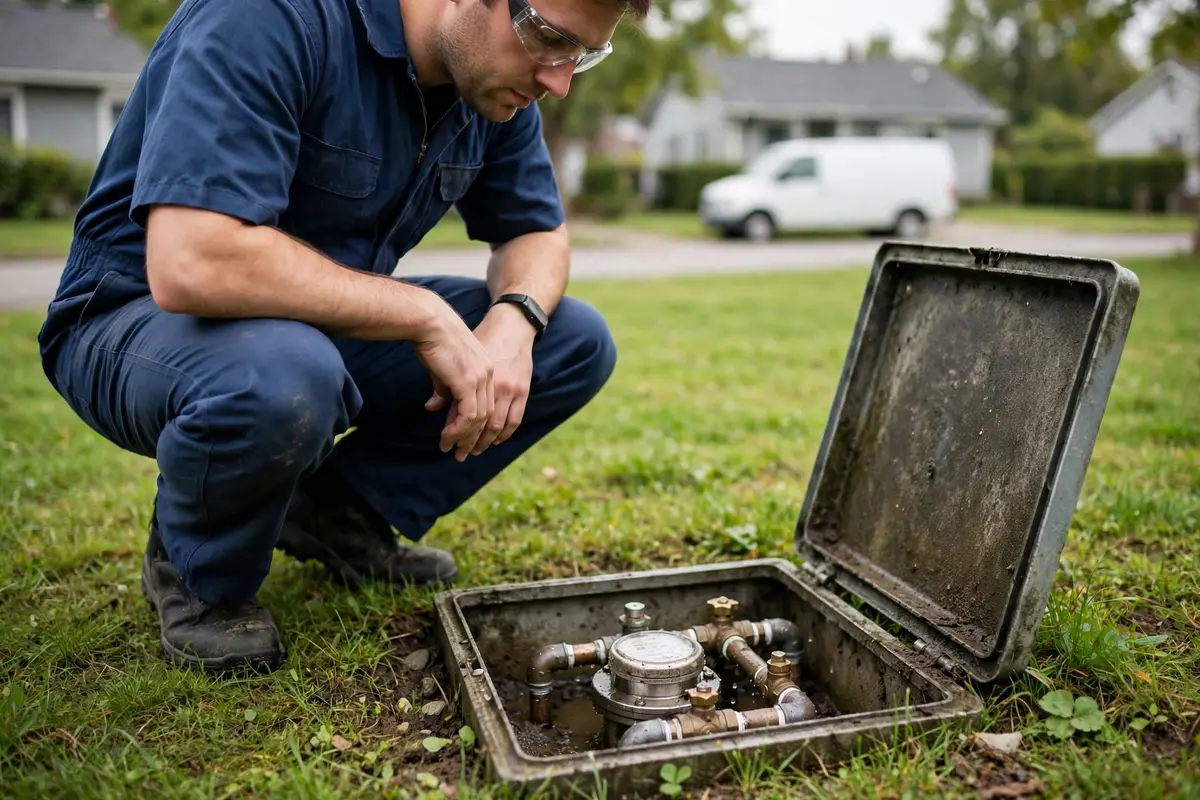
An annual pressure check establishes how your supply system behaves when it is healthy, and whether that behavior is changing. Static pressure that is too high stresses every pipe, fitting, and appliance in the home and accelerates wear on aging lines, while pressure that drops during testing reveals losses that have not yet shown themselves. Recording the results year over year turns a single snapshot into a trend, and trends are what catch slow developing problems. The check also verifies that shutoff valves actually work, which matters enormously on the day you need one.
Meter monitoring is the habit that costs nothing and catches the most. Once a month, with everything off, glance at the meter or record its reading at night and again in the morning. Any movement during hours when no water should be used deserves investigation while the leak is still small. Some homeowners photograph the meter with their phone to make comparisons effortless. In Bradenton, where slab leaks hide completely in sandy soil, the meter is often the only witness a leak has, and checking it is genuine prevention.
The inspection formalizes these habits into a baseline for your home. You learn where your meter and main shutoff are, what your normal pressure is, which fixtures and valves were checked, and what to watch before the next visit. Seasonal timing helps too: many homeowners schedule before rainy season so the system enters the wettest months verified tight. That baseline documentation also helps any future technician, since detection work starts faster when the home history and normal readings are already on record.
Fixtures are where small leaks live, and small leaks are teachers: they show how water behaves in your home before a buried line fails. The inspection covers toilets that run intermittently, faucets that drip or sweat at their bases, supply lines and angle stops under sinks, water heater connections and its drain and relief lines, washing machine hoses, and refrigerator lines. Each is a modest item alone, but together they account for a large share of household water loss, and several of them cause real damage when they fail suddenly rather than drip politely.
Under sink and behind appliance spaces get particular attention because leaks there hide in the dark and feed mold quietly in Florida humidity. The inspector looks for moisture staining, swollen cabinet floors, corrosion on supply connections, and hoses that are bulging or past their prime. Water heaters are checked for rust at fittings and pans that are dry and intact, since a heater leak above a slab home interior spreads fast. Irrigation backflow connections and outdoor hose bibs round out the list, as outdoor leaks are easy to miss entirely.
You receive the fixture findings as a plain list: what is sound, what is weeping, what should be replaced soon, and what simply needs watching. Many items are inexpensive corrections when caught at this stage, like a hose or a valve, compared with the cabinet or flooring work the same failure causes later. The inspection never inflates the list; items are described by their actual condition so you can prioritize calmly. Prevention works best as a routine, and a clear report makes the routine easy to keep.
Rainy season, from June to October, is when Bradenton plumbing weaknesses tend to declare themselves, so preparation happens before the storms settle in. Saturated soil shifts and presses on buried lines, the water table rises against slabs, and any small leak gains a wet environment where it does damage faster. A pre season inspection verifies pressure, checks the meter behavior, and confirms shutoffs work, so you enter the wet months knowing the system is tight. It also clears the irrigation system, which runs hardest in the dry weeks just before the rains. The pressure conversation includes your pressure regulator if the home has one, since a failing regulator can let street pressure climb into ranges that punish old pipe. Correcting excessive pressure is one of the few changes that protects every line, fitting, and appliance in the house at once. It is a quiet, unglamorous adjustment that prevention minded homeowners appreciate most in the years when nothing goes wrong because of it.
Storm readiness includes knowing your own home. Locate the main shutoff and test it before you need it in a hurry, keep the meter box accessible rather than buried under mulch or storm debris, and note where detection access points are. After a hurricane or major storm, a quick meter check once power and water stabilize can catch a storm stressed line early, before weeks of saturated soil hide the evidence. Homes near the Manatee River and in low lying areas benefit most, since their soil stays wettest the longest. Think of the inspection report as the home plumbing equivalent of a chart at the doctor: dated results, noted changes, and a plan for what to watch. Kept over several years, those reports show whether pressure is creeping, whether a valve is deteriorating, and whether meter behavior is changing. That history is exactly what turns a future emergency call into a short, informed visit instead of a cold start.
The inspection includes a supply pressure check and meter test to prove the system is holding, a review of the water heater and its connections, checks of toilets, faucets, under sink supply lines and valves throughout the home, inspection of washing machine and refrigerator lines, a look at outdoor hose bibs and the irrigation connection, and confirmation that the main shutoff operates properly. Accessible pipe is examined for corrosion and past repair quality. The buried lines are judged by how the system behaves under test, which is how their condition honestly shows itself. Sellers and buyers both use the report because it is neutral: it records tests, not opinions, and it either clears the buried lines or flags a specific question for detection. Landlords use it between tenants for the same reason, and insurers appreciate documentation that a home water system is actively maintained. Few home documents cost so little relative to the size of the surprises they prevent or explain.
The visit ends with a written summary: test results, fixture findings in priority order, and specific watch items for the coming year, such as an aging valve or a pressure reading trending upward. If a hidden loss is detected, you learn that too, with the next step explained: targeted detection to locate it while it is small. Nothing in the report is padded and nothing is alarmed up. It is a factual snapshot of your plumbing health that makes every later decision, repair, reroute, or sale, rest on evidence instead of surprises. Finally, keep the human habit that makes inspections work: act on the small findings while they are small. A hose replaced this month is a line item; the same hose bursting next season is a flooded laundry room. The inspection exists to hand you that choice early, with the evidence in front of you, every single year, before Florida weather and aging pipe make the choice for you.
Straight answers before you call.
Describe the signs you are seeing and we will point you to the right next step.
Call (941) 307-1712Once a year suits most homes, timed before rainy season so the system is verified before the wettest months. Homes with original 1950s to 1970s plumbing, a past slab leak, or a previous reroute benefit from keeping that annual rhythm strictly.
An inspection cannot stop an old pipe from aging, but it catches the measurable signs of leaks and stress early: pressure loss, silent meter movement, rising pressure that strains lines, and failing fixtures and valves. Acting on those findings either fixes a leak while it is tiny or corrects conditions that hasten failure.
Watch the water meter monthly with everything off, note your water bill trend, and pay attention to pressure changes, new sounds, and any musty spots near plumbing walls. Photographing the meter reading makes comparisons simple.
Very. For buyers, it documents the state of plumbing that cannot be seen, including whether the buried lines hold pressure, which informs one of the least visible risks in a slab home purchase. For sellers, a clean inspection report answers buyer questions with evidence.
You receive the test evidence and a clear explanation of what it means, followed by a recommendation for targeted detection to locate the leak precisely. Because inspections catch losses early, the leak is usually smaller and the repair simpler than it would be after damage appears.
Slab leaks flooding your Bradenton home found and fixed fast, day or night.
Under-slab leaks pinpointed with acoustic and thermal tools before any concrete is cut.
Electronic listening and correlation equipment that hears the leaks your ears cannot.
Hidden water leaks in walls, ceilings, and yards traced to their exact source.
Call now and describe what is happening. We will take it from there.
Call (941) 307-1712