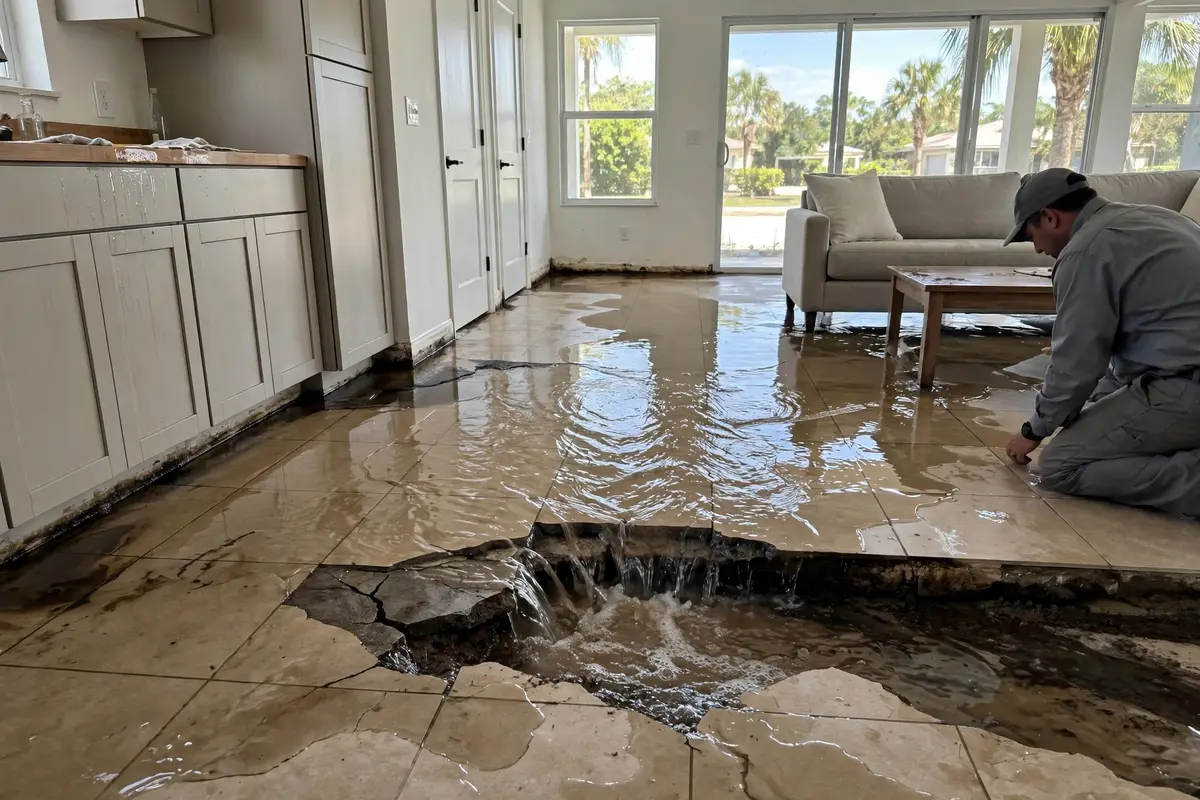
Professional emergency slab leak repair for Bradenton and Manatee County homes.
An emergency slab leak means water is actively escaping under your concrete floor and damaging your home right now. Shut off the main water supply, move belongings away from wet areas, and avoid walking on buckled or lifting flooring. Bradenton Slab Leak Pros responds to urgent slab leaks across Manatee County with detection, containment, and a clear repair plan. Call (941) 307-1712
A slab leak rarely waits for a convenient moment. It can start as a faint hissing sound under the tile late at night, then turn into warm, damp flooring and a water meter that never stops spinning by morning. In Bradenton, where most homes sit on slab-on-grade foundations over sandy soil, escaping water travels fast and quietly. It soaks baseboards, lifts vinyl and laminate, and wicks into drywall before many homeowners realize the source is below the floor. Fast action in the first hours limits how far that water spreads.
Our emergency response starts with containment, not demolition. The technician confirms the leak is under the slab, isolates the affected line where possible, and maps the wet areas so nothing important gets missed. Drying and protecting the home come first, because standing water and soaked materials create bigger problems the longer they sit. If the main supply has to stay off for safety, we explain exactly why and what happens next. Call (941) 307-1712 and a real person will walk you through the first steps while help is on the way.
Bradenton homes face conditions that make urgent leaks more common. Many ranch homes built from the 1950s to the 1970s still carry aging copper or galvanized lines under the slab, and decades of mineral rich water and shifting sandy soil wear those pipes thin. The high water table across Manatee County keeps the ground under slabs damp for much of the year. During rainy season, from June to October, saturated soil adds pressure around buried lines. A pipe that was weeping slowly can split open under that combined stress.
Some slab leaks announce themselves loudly. Water pooling on tile or concrete with no spill above it, a sudden drop in water pressure, or the sound of running water when every fixture is off all point to an active break below the floor. A hot spot on the floor often means a hot water line is leaking, heating the concrete above it around the clock. The water bill climbing sharply in a single cycle is another strong signal, especially when household use has not changed at all.
Other signs build more slowly but matter just as much in an emergency. Musty odors that return after cleaning, baseboards pulling away from walls, and paint bubbling near the floor suggest moisture has been present for weeks. Cracks appearing in tile grout or across a concrete floor can follow soil movement under the slab. Mold growth along lower walls tells you water has found a path upward. When several of these signs appear together, treat the situation as urgent rather than waiting for a regular appointment later in the week.
Irrigation systems can mimic a slab leak, so a quick check outside helps narrow things down. Turn off the irrigation controller and watch whether the meter still moves, and look for soggy patches in the yard that stay wet between waterings. If the meter keeps spinning with irrigation and house fixtures off, the leak is likely in the pressurized supply lines. Note when you first saw each sign and take photos for your records. That timeline helps the technician judge how long water has been escaping and how much drying the home may need.
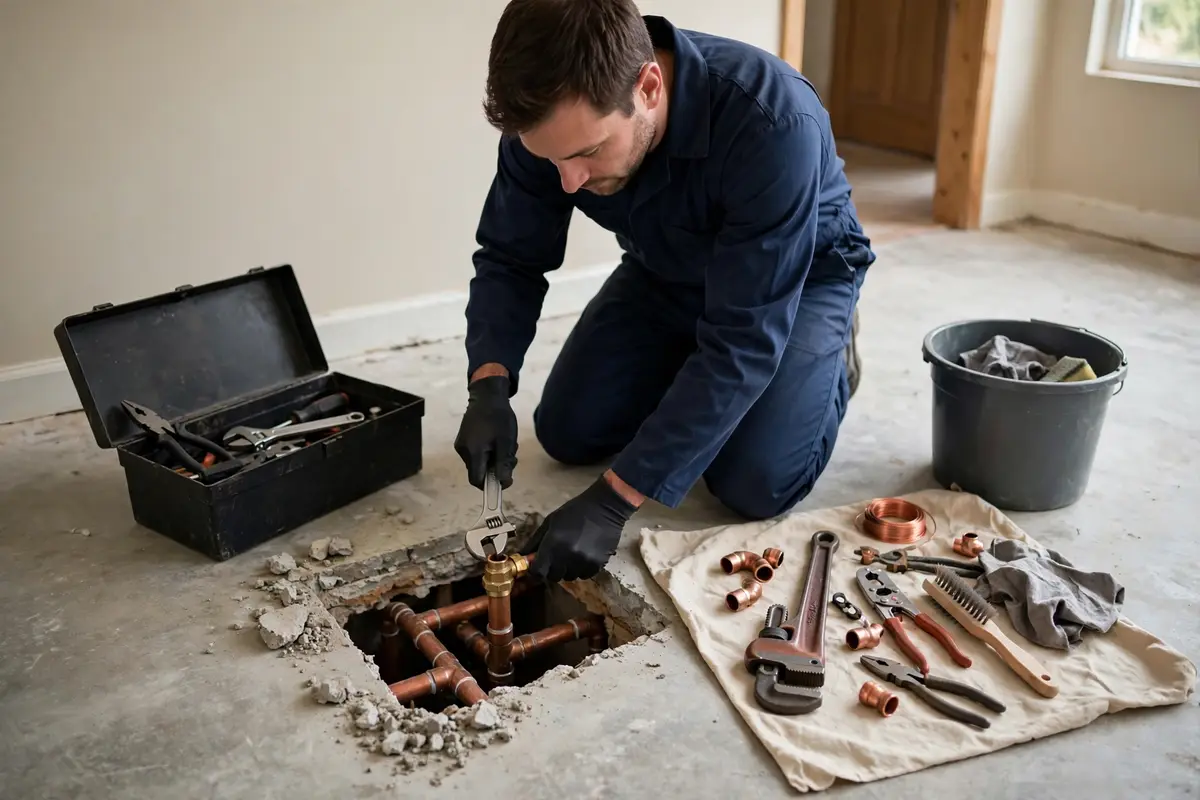
The emergency visit follows a clear order: stop the water, find the leak, protect the home, then plan the repair. The technician shuts down the affected supply, tests pressure to confirm the break, and uses listening equipment to locate the leak through the concrete. Once the spot is marked, you hear the repair options before any concrete is opened. Spot repair, rerouting, and lining each fit different pipe conditions, and the right choice depends on the age and state of the line, not just speed.
Stabilizing also means dealing with the water already inside the home. Wet flooring materials may need lifting so the slab can dry, and fans or dehumidification may be recommended where moisture has spread into walls. We point out which areas need attention first and which can wait safely. In homes near the Manatee River and in low lying neighborhoods, the high water table can slow drying, so moisture readings guide the timeline rather than guesswork. You get a written summary of what was found, what was done, and what remains.
After stabilization, the repair decision weighs the condition of the whole line. A single break in otherwise sound copper may suit a direct spot repair through a small opening. A line with corrosion at several points often makes rerouting the smarter long term answer, since fixing one weak spot leaves the others in place. We explain the reasoning in plain language, including how each option affects your floors, your water downtime, and future access to the pipes. Call (941) 307-1712 at any point during the process with questions.
First, shut off the water at the main valve, usually near the meter or where the supply enters the home, and turn the handle until flow stops completely. Next, switch off the water heater if a hot line is involved, since a draining tank can overheat and damage its elements. Move furniture, rugs, and stored items away from wet areas, and place towels at door thresholds to slow spreading. Avoid breaking up flooring or concrete yourself, because the leak point is rarely where water surfaces. Keep children and pets away from buckled floors and any exposed electrical outlets near standing water. Keep the shutoff valve accessible and tell everyone in the household where it is, because the person home when a leak worsens may not be the person who found it. If you rent the home or manage it for someone else, notify the owner the same day, since documentation and quick decisions protect both the property and your deposit.
Then document what you see and make the call. Photograph wet areas, note the meter reading, and write down when sounds or dampness first appeared, because those details shorten the detection work later. Do not ignore a leak that seems to slow down, since pressure changes can reopen a split at any hour. If water is near the electrical panel or appliances are sitting in standing water, leave those items alone and mention it when you call. An emergency visit can usually isolate the line so part of the home keeps water service while the repair is planned and completed in the right order. Ask the technician to show you the meter before and after isolation, because seeing it stop is the clearest proof the flow is controlled. Keep the written findings with your home records and insurance paperwork. If flooring must be lifted for drying, ask which materials can be saved and which cannot, so the restoration plan and the repair plan move forward together without conflicting timelines.
A slab leak becomes a foundation concern when escaping water starts moving the soil that supports the concrete. Bradenton soil is mostly sand over limestone, and flowing water carries sand particles away grain by grain, opening small voids under the slab. The slab then bears weight unevenly, and floors can slope, crack, or feel hollow in spots. Short leaks rarely cause this, which is why speed matters so much. The longer water runs under the home, the more support the soil loses and the wider those voids can grow beneath load bearing areas of the floor. The risk timeline is measured in days of flow, not in the size of the visible puddle, because most washout happens out of sight below the concrete. A leak caught within its first days usually leaves the soil support intact. One that runs through a rainy season can hollow the ground beneath high traffic areas of the floor and turn a plumbing job into a structural project.
Warning signs of soil loss include doors that suddenly stick, cracks that widen over weeks, and gaps opening between flooring and baseboards. A musty smell combined with a floor that feels soft or uneven deserves prompt attention. Repairing the pipe always comes before any soil or foundation work, because filling voids while water still flows simply washes new material away again. Once the line is sealed or bypassed and pressure tests confirm it holds, the slab and soil can be assessed honestly. Early action usually keeps the problem in the plumbing, where it belongs, instead of letting it grow into structural work. If several warning signs are present at once, prioritize the visit over monitoring, because combined clues rarely appear by coincidence in the same weeks. Photograph cracks with a coin for scale and date the images, since a simple record shows whether change is active or historical. That evidence helps every professional who later evaluates the home and keeps opinions grounded in observed change.
Straight answers before you call.
Describe the signs you are seeing and we will point you to the right next step.
Call (941) 307-1712Shut the water off as soon as you suspect an active slab leak, ideally within minutes of noticing flooding, running water sounds, or a spinning meter. Every hour of flow sends more water under the slab, soaking soil and flooring. Closing the main valve is the single most effective step you can take before help arrives.
In most cases, yes. Once the affected line is isolated and wet materials are managed, the rest of the home is usually safe to occupy. Exceptions include standing water near electrical systems or extensive flooring removal in main living areas. Your technician will explain any limits clearly before work begins so you can plan around them.
Treat it the same as a daytime leak: shut off the main water, protect belongings, and call for emergency help. Slab leaks do not pause overnight, and water damage grows with every hour of flow. Stabilizing the home first and completing the full repair in proper order protects both the structure and your flooring.
No. The visit starts with confirmation and electronic location of the leak, and some emergencies are resolved by isolating the line or choosing a reroute that avoids the slab entirely. Concrete is opened only when a direct spot repair is the right option, and only after the exact location is marked and the plan is explained to you.
Share when you first noticed signs, whether the meter spins with fixtures off, any hot spots or pooling locations, and the age of your plumbing if you know it. Mention irrigation systems and recent plumbing work too. These details help the technician bring the right detection equipment and prioritize the first checks on arrival.
Under-slab leaks pinpointed with acoustic and thermal tools before any concrete is cut.
Electronic listening and correlation equipment that hears the leaks your ears cannot.
Hidden water leaks in walls, ceilings, and yards traced to their exact source.
A precise opening over the leak, a direct repair, and a clean concrete patch.
Call now and describe what is happening. We will take it from there.
Call (941) 307-1712