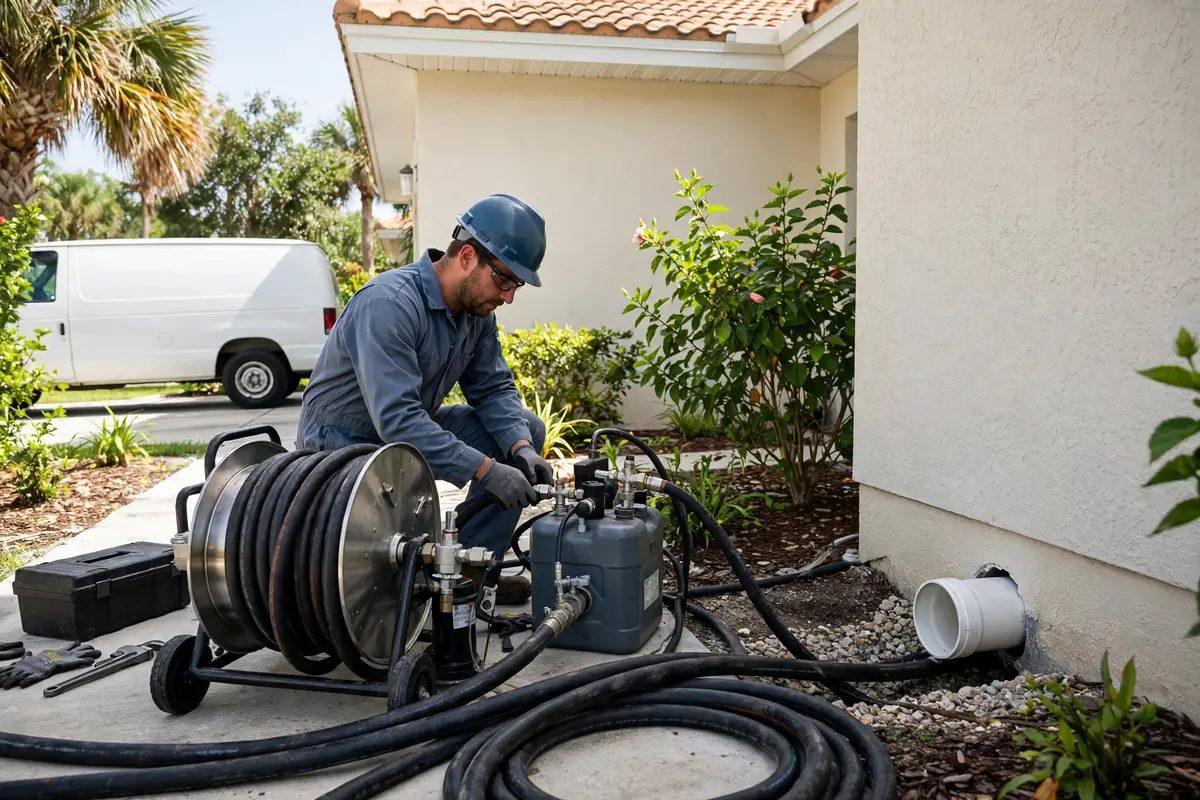
Professional epoxy pipe lining for Bradenton and Manatee County homes.
Epoxy pipe lining seals aging water lines from the inside by coating the interior of the existing pipe with a cured epoxy barrier. The process cleans the line, applies the coating, and lets it cure into a smooth new inner surface, all without opening your Bradenton slab. Call (941) 307-1712
Epoxy pipe lining offers a third path between spot repair and rerouting: restore the pipe you have, from the inside. Instead of opening the slab or running new lines overhead, technicians clean the existing pipe and coat its interior with epoxy that cures into a continuous new surface. The coating seals pinholes, covers corroded areas, and separates your water from the aging metal. For Bradenton homeowners with widespread pipe wear but structurally sound lines, lining can address the whole run at once with no floor cutting.
The trenchless nature of the process is its main appeal in slab-on-grade Florida homes. Floors, driveways, and landscaping stay untouched, and the work proceeds through existing access points like cleanouts and fixture connections. That matters under finished tile, hardwood, and open plan concrete where any opening is expensive to restore. Lining also avoids the soil disturbance that digging causes in sandy ground. Call (941) 307-1712 to find out whether your pipes are candidates for lining after an inspection of their condition.
Lining is not a universal answer, and honest assessment comes first. Pipes that have collapsed, separated at joints, or lost their round shape cannot be lined successfully, because the coating follows the pipe it is given. Lines with heavy scale or partial blockages may need thorough cleaning before they qualify. The inspection stage, often including a camera look inside the line, decides candidacy on evidence. When a pipe qualifies, lining restores flow and seals leaks; when it does not, rerouting remains the dependable fallback.
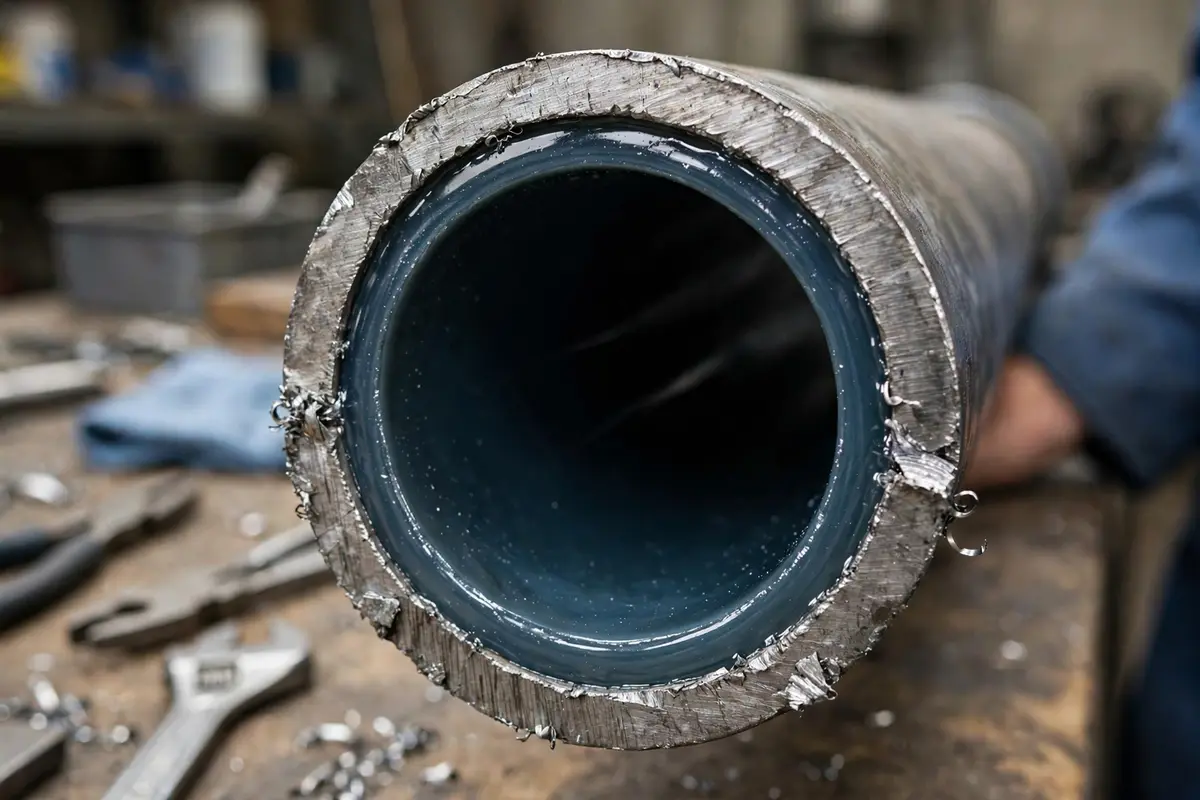
Preparation decides whether a lining succeeds. The line is first drained and cleaned to remove scale, corrosion products, and buildup from the pipe walls, because epoxy must bond to a clean, stable surface. Abrasive cleaning methods scour the interior back toward bare material and restore much of the original diameter that mineral and rust deposits had narrowed. The cleaned line is dried and inspected again to confirm it is ready. Skipping or rushing preparation is the main cause of lining failures, so this stage gets the time it requires.
Application follows with controlled coating of the interior. Epoxy is introduced and distributed through the line so it covers the full inner surface, including the pitted and thinned areas that were leaking or close to leaking. The goal is a continuous barrier with even coverage, not a partial patch. Fittings and junctions receive particular attention because geometry there makes coating harder to keep uniform. Once applied, the epoxy begins its cure, transforming from a liquid coating into a hard, smooth inner pipe within the old one.
Curing is a patience stage with a defined endpoint. The epoxy must harden fully under the temperature and time conditions its formulation specifies before water returns to the line. After curing, the line is inspected and pressure tested like any other repair, proving it holds before the system goes back into daily service. Flow usually improves noticeably, since the smooth epoxy surface and the cleaned diameter let water move more freely than the corroded original. You receive a summary of which lines were lined and the test results.
Candidacy depends on structure, not just age. A qualifying pipe is continuous and round, with its joints intact and no collapsed or crushed sections, even if its walls are pitted, scaled, or weeping at pinholes. Copper lines with widespread pinhole corrosion are classic candidates, since the metal still holds its shape while its surface fails. Galvanized lines qualify when cleaning can restore an open, stable bore. Diameter and the number of bends and branches also matter, because coating equipment must pass through the run evenly.
Florida conditions add specific considerations. Lines under Bradenton slabs sit in damp, sandy soil over limestone, and groundwater can enter a broken pipe from outside, so a pipe leaking badly at a separated joint is a poor candidate until that defect is addressed. The high water table means external pressure on the line is real. Inspection reveals these issues before any promise is made. Homes near the Manatee River and in older neighborhoods get the same evidence based answer: line what qualifies, reroute what does not, and never coat over a structural failure.
The inspection itself is worth having even if lining turns out not to fit. Camera views and pressure data show the internal state of lines you could never otherwise see, turning guesswork about 50 year old plumbing into documented fact. That information shapes every option, including targeted spot repairs and staged reroutes. Many homeowners start the conversation curious about lining and finish it with a clear map of their whole system. Either way, the decision rests on the condition of your actual pipes rather than on the appeal of any single method.
Lining works without digging because every stage happens inside the pipe, reached through access points that already exist above the slab. Cleaning tools, coating equipment, and inspection cameras all travel through the line itself, so the concrete above it is never disturbed. The pipe becomes its own work tunnel. Water is shut off and the line is drained, cleaned, dried, coated, and cured in sequence, with technicians working from the ends of the run rather than from an excavation in the middle of your floor. There is also a documentation benefit: the inspection footage recorded before lining becomes a permanent record of your buried plumbing condition. If questions ever arise about the lines, during a sale, a remodel, or a future repair, that footage answers them directly. Few homeowners ever see inside their under slab pipes, and the clarity it provides is valuable whether the final decision is lining, rerouting, or a targeted repair.
The finished result is best understood as a new pipe surface inside the old pipe. The epoxy barrier carries the water, seals the leaks and pinholes, and shields the water from corroded metal, while the original pipe and surrounding slab continue to provide the structure around it. Because nothing was excavated, there is no concrete patch, no flooring restoration, and no backfill to settle in sandy soil. For Bradenton homes where the slab and finishes are the expensive part of any repair, that preservation is the heart of the method. Access planning is part of the trenchless advantage. Because the work enters through existing points, furniture stays put, floors stay down, and daily life in the home is interrupted mainly by the water shutoff during active work. For households that cannot easily vacate, and for homes where the slab carries expensive continuous finishes, that low disruption profile is often the deciding factor once the pipes are confirmed to qualify.
A lining lasts when preparation, application, and pipe condition align. Thorough cleaning gives the epoxy a sound surface to bond with, even application gives it consistent thickness, and full curing gives it its designed hardness and chemical resistance. A lining applied over scale or rushed through curing cannot be expected to perform the same way. This is why the process discipline matters as much as the material itself, and why inspection and testing after curing are built into the work rather than treated as optional extras. After curing and testing, your lined lines go back into ordinary service with no special handling beyond normal plumbing care. Aggressive drain chemicals are a poor idea in any older system and remain so, and pressure should stay within the range recorded at inspection. Beyond that, the system asks for the same simple monitoring as any plumbing: an occasional meter check and attention to bills that change without explanation.
Service conditions after lining also play a role. Water chemistry, pressure levels, and how the surrounding original pipe continues to age all influence the system over time, even though the water now contacts epoxy rather than metal. The lining does not depend on the old pipe staying perfect; it forms its own continuous barrier inside it. Periodic pressure checks and meter monitoring help confirm the system stays tight. Homeowners receive realistic expectations based on their pipe condition, not invented lifespan promises, along with guidance on watching the system. Expect the lifespan conversation to stay specific to your pipes: their material, their measured condition, the quality of preparation they allowed, and the water they carry. A lining in a well prepared, structurally sound line has every reason to serve for a long stretch. Where any of those inputs are doubtful, you will hear that too, because a realistic expectation protects you better than an impressive number invented for the brochure.
Straight answers before you call.
Describe the signs you are seeing and we will point you to the right next step.
Call (941) 307-1712Epoxy systems used for potable water lining are formulated for contact with drinking water and are applied and cured under controlled conditions before the line returns to service. The cured coating is inert, smooth, and separates water from the old pipe metal. After curing, the line is flushed and pressure tested.
A burst or separated pipe is usually not a lining candidate at the break itself, because lining needs a continuous, structurally intact pipe to coat. The damaged section may need a direct repair first, or the run may suit rerouting better. An inspection determines which case you have.
Both address system wide aging without repeated slab cutting. Lining restores the existing buried lines from inside and preserves all finishes, while rerouting replaces the path entirely with accessible new lines overhead. The right choice depends on pipe structure, layout, and inspection findings. Homes with sound pipe geometry often line well; homes with failing joints or collapsed sections usually reroute.
The coating itself is thin, and the cleaning stage usually removes far more material in scale and corrosion than the coating adds back. Most lined lines flow as well as or better than they did before, because the interior goes from rough and narrowed to smooth and open.
Cost follows the length and diameter of pipe being lined, the number of access points and branches involved, how much cleaning the line needs, and whether any sections need repair before they can be coated.
Slab leaks flooding your Bradenton home found and fixed fast, day or night.
Under-slab leaks pinpointed with acoustic and thermal tools before any concrete is cut.
Electronic listening and correlation equipment that hears the leaks your ears cannot.
Hidden water leaks in walls, ceilings, and yards traced to their exact source.
Call now and describe what is happening. We will take it from there.
Call (941) 307-1712