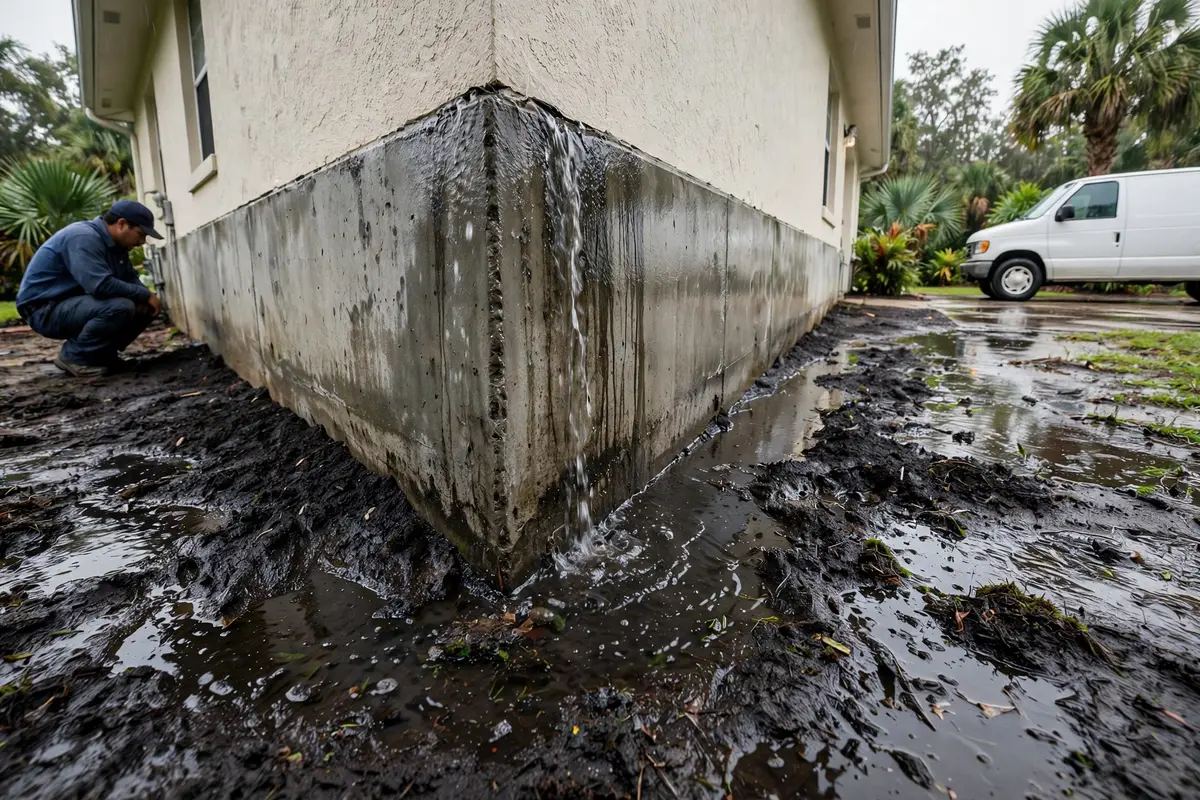
Professional foundation leak repair for Bradenton and Manatee County homes.
Foundation leak repair addresses water escaping at or under your slab that threatens the soil supporting your home. The plumbing leak is located and fixed first, because flowing water washes sand away and creates voids, and only then can soil and foundation concerns be assessed honestly in Bradenton homes. Call (941) 307-1712
When a leak threatens a foundation, two problems exist at once: the broken pipe and the soil it is washing away. The order of repair is not negotiable. Water must stop first, because any soil work done while a leak still flows will literally wash away again. Foundation leak repair therefore begins as plumbing: locate the leak precisely, then repair, reroute, or line the line so it holds under pressure testing. Only with dry, stable conditions can anyone judge what the water did to the ground beneath your Bradenton home.
That sequence protects your money as much as your home. Homeowners are sometimes sold foundation work while a leak still runs, and the new material erodes from below until the problem returns. A pressure verified dry slab changes the picture completely: voids stop growing, moisture readings fall, and the true extent of soil loss can be measured instead of guessed. Call (941) 307-1712 if you have been told you have foundation trouble alongside any sign of a leak, so the plumbing question is settled first.
Bradenton foundations deserve this care because of what they sit on. Most local homes rest on slab-on-grade foundations over sand with limestone deeper down, and the water table is never far below. Sand gives good support when it stays in place, but it moves readily in flowing water, which is exactly what a pressurized leak provides around the clock. Add rainy season saturation from June to October, and soil around a leaking line is under constant stress. Stopping the leak early is the single most effective foundation protection available.
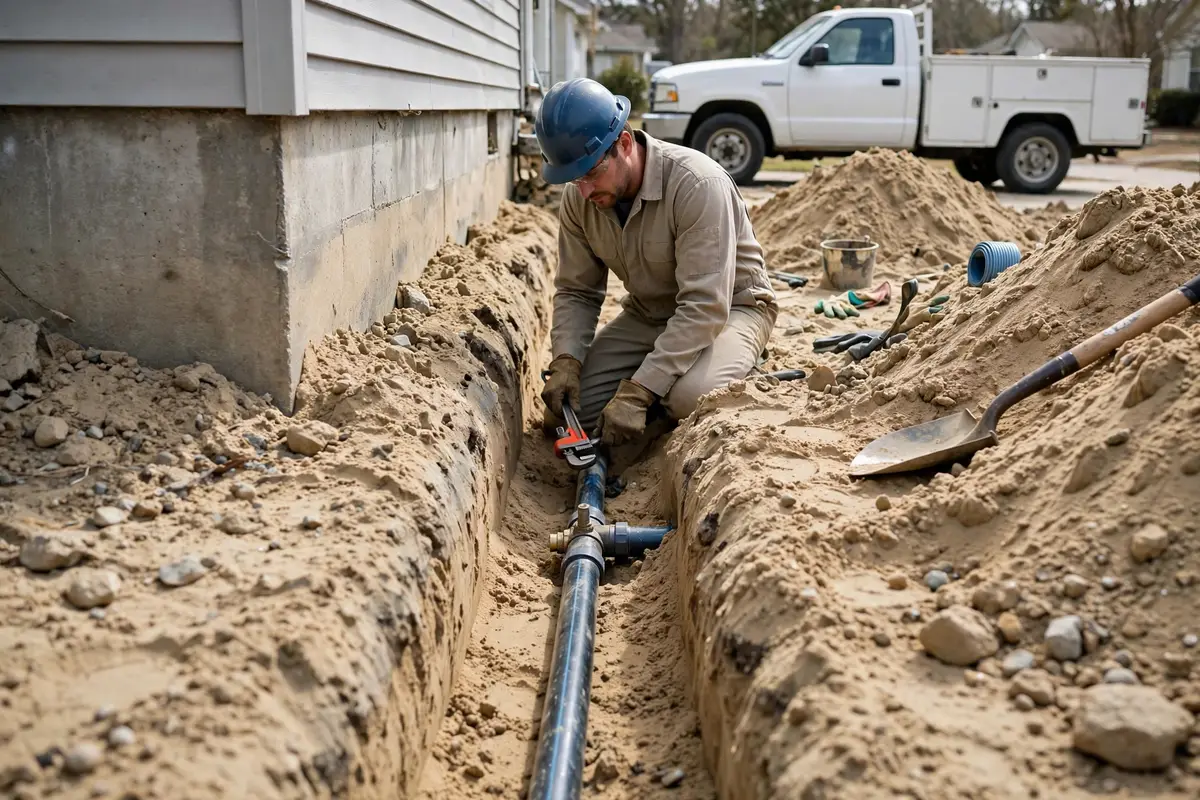
Soil washout begins the moment pressurized water escapes under a slab. The jet of water lifts fine sand particles and carries them along the easiest path, which is usually along the pipe trench or toward lower ground. Over weeks and months, that slow transport hollows out spaces called erosion voids beneath the concrete. The slab above may bridge a small void without symptoms, which is why washout is deceptive: the damage grows silently until the void is large enough that the floor cracks, slopes, or sounds hollow when walked on.
The rate of washout depends on leak size, soil type, and water pathways. Bradenton sand moves faster than clay soils would, and a gravel pipe bed gives escaping water a ready channel to travel and erode along. Leaks near the foundation edge can wash soil outward beyond the slab entirely, undermining the perimeter where loads concentrate. Interior leaks tend to create voids under the floor area near the break. In both cases the leak location, established during detection, predicts where voids are most likely and where follow up assessment should concentrate.
Once the pipe is fixed and verified, voids can be evaluated calmly. Small voids that are dry and stable may simply be documented and monitored, while larger ones under load bearing areas may warrant filling by foundation specialists to restore support. The key point is that the decision is made with the water off and the facts visible, not in the middle of an active leak. We coordinate the plumbing side cleanly and explain what we found under your home so any foundation professional you engage starts with accurate information.
Hydrostatic pressure is the push of groundwater against your slab and foundation edges, and in Bradenton it is a fact of life. With a high water table and months of rainy season downpours, water in the soil presses on every below grade surface. A healthy slab resists that pressure, but a plumbing leak at the foundation edge adds pressurized water from inside the system to the groundwater outside it. The combination can force moisture through joints and cracks, dampen perimeter flooring, and accelerate soil movement right where the foundation meets the ground.
Edge leaks are easy to misread as drainage or storm problems, and sometimes they are. The difference is that a plumbing leak runs in dry weather too, moves the meter, and keeps a specific area damp between rains, while storm driven moisture follows weather patterns. Testing separates the two: if pressure drops and the meter moves with irrigation off during a dry spell, the water is coming from your pipes. That distinction decides whether you need plumbing repair, drainage work, or both in the right order.
Hurricanes complicate the picture for Manatee County homes. Major storms saturate soil for weeks, shift shallow ground, and can stress buried lines at the slab edge, so leaks sometimes first appear in the months after a storm season. Irrigation overspray against foundation walls adds chronic moisture that hides leak symptoms. A careful detection visit accounts for these local patterns, testing the plumbing as its own system rather than blaming the weather. When the evidence says the pipe is at fault, fixing it removes the one water source you can fully control.
Foundation repair materials need stable, dry soil to perform. Fill material, grout, or any support work placed under a slab while water still flows will be undermined by the same erosion that created the void, because moving water seeks the new material and carries its fine particles away just as it did the original sand. Contractors who understand the sequence will ask for proof the plumbing holds before they begin. A passed pressure test after the leak repair is that proof, and it protects the warranty value of any foundation work that follows. Insurance and resale both reward this order of operations. Documented detection, a verified repair, and follow up assessment create a paper trail showing the problem was handled correctly and completely. Undocumented foundation work over an active leak, by contrast, invites exactly the questions buyers and adjusters ask hardest. Keeping reports, pressure test results, and dated photographs turns a frightening episode into a well managed repair history for the home.
The sequence also produces an honest diagnosis. Some homes show dramatic symptoms, cracking and sloping floors, that stabilize completely once the leak stops and the soil dries, needing monitoring rather than major structural work. Others reveal voids that genuinely require filling. You cannot know which home you have until the water has been off long enough to assess. Fixing the leak first therefore saves money twice: it prevents wasted foundation work in the first case and makes necessary foundation work durable in the second. It is also worth separating leak driven movement from the ordinary settlement most Florida homes experience in sand. Minor, stable cracking that has not changed in years is common and usually cosmetic. Movement that is new, widening, or paired with plumbing symptoms is different, and the plumbing symptoms are testable today. Testing first prevents both errors: ignoring a leak that is undermining the slab, and buying structural work for a home whose real problem is a pipe.
The signs combine plumbing clues with structural ones. On the plumbing side: a meter that moves with fixtures off, unexplained bill increases, hot spots or damp areas on the floor, and the sound of running water in a quiet house. On the structural side: new or widening cracks in tile, concrete, or walls, doors and windows that begin sticking, gaps at baseboards, and floor areas that feel uneven or sound hollow underfoot. Either group alone deserves attention; together, they call for prompt detection and repair before soil loss grows. After repair, give the home a defined observation period. Keep dated notes on doors, cracks, and floor feel, and recheck the meter monthly to confirm the system stays tight. Stability over a wet season is meaningful evidence that the soil is no longer being disturbed. If movement continues after the plumbing is proven sound, that persistence itself is useful information, and it points the next evaluation toward drainage or structural causes with the leak ruled out.
Location patterns add information too. Cracks radiating near a damp area, or settling concentrated along one side of the home, often match the path of a leaking line or the direction washed soil traveled. Documenting when each sign appeared helps reconstruct how long the leak has been active, which estimates how much washout is plausible. None of these signs is a verdict by itself, since Florida homes also settle naturally in sandy soil. Testing the plumbing first gives the structural questions a factual starting point instead of speculation. Throughout the process, insist on explanations tied to your home: the located leak point, the direction water most likely traveled, and the specific areas assessed afterward. Generic foundation fear helps no one. A careful plumber and a careful foundation specialist will each describe what they can prove, what they suspect, and what they recommend watching, and those three categories should never be blurred together when your home and money are on the line.
Straight answers before you call.
Describe the signs you are seeing and we will point you to the right next step.
Call (941) 307-1712Yes, when the leak runs long enough to wash supporting sand out from under the slab. The concrete then spans a void it was not designed to bridge, and normal loads can crack it or let it settle unevenly. Short leaks caught early rarely reach that stage.
Signs include hollow sounds when tapping or walking on the floor, cracks or settling near the leak area, and gaps opening at baseboards. After the leak is repaired and the soil dries, the areas around the located leak point are assessed first, since washout concentrates there.
Call for leak detection first if there is any evidence of a plumbing leak: meter movement, damp floors, or rising bills. Foundation work cannot succeed while water still flows under the slab, and some symptoms stabilize once the leak stops.
Persistent dampness at the foundation edge during dry weather is a strong leak signal, because storm and groundwater moisture usually recede between rains while a pressurized plumbing leak never pauses. A meter test and pressure test will confirm whether your supply lines are losing water.
Fixing the leak stops the damage from growing and lets the soil dry and stabilize, which is the essential first step. Soil that has already washed away does not return on its own, so larger voids may still need filling to restore support. Many homes need only the plumbing repair and monitoring.
Slab leaks flooding your Bradenton home found and fixed fast, day or night.
Under-slab leaks pinpointed with acoustic and thermal tools before any concrete is cut.
Electronic listening and correlation equipment that hears the leaks your ears cannot.
Hidden water leaks in walls, ceilings, and yards traced to their exact source.
Call now and describe what is happening. We will take it from there.
Call (941) 307-1712