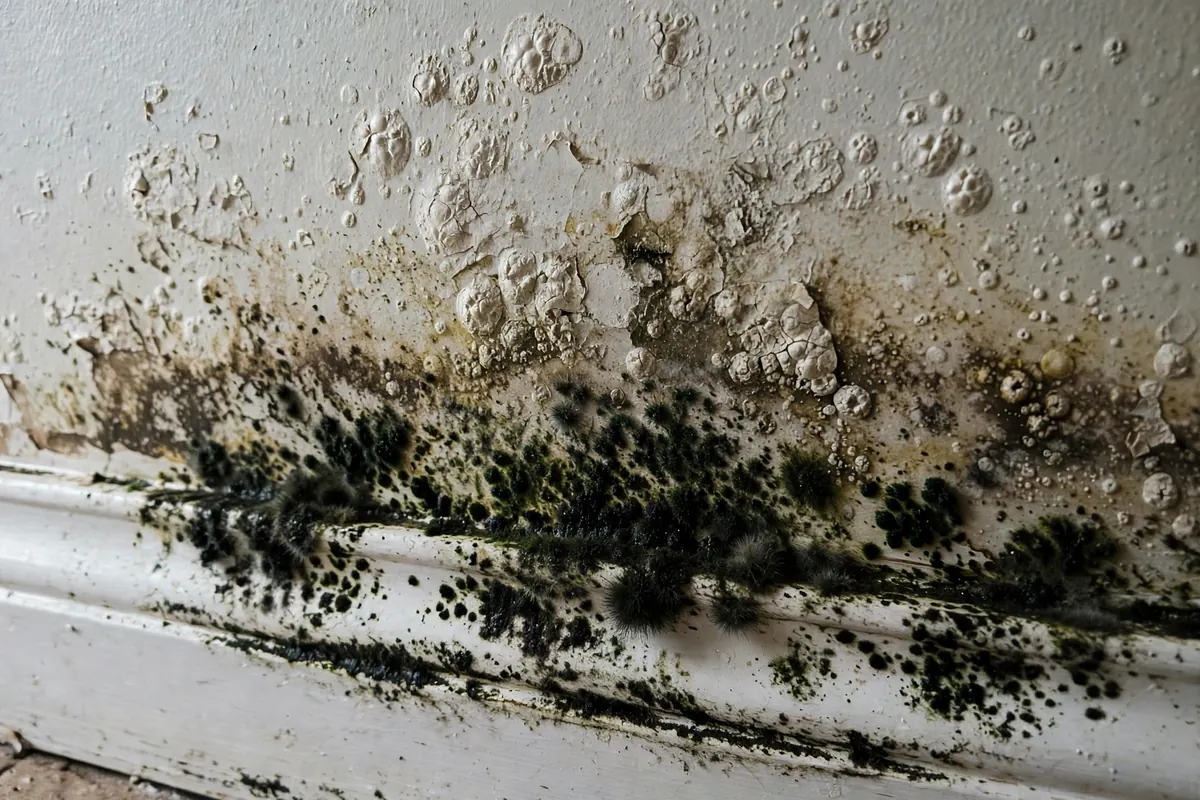
When a room smells musty no matter how often it is cleaned, the moisture feeding that smell is usually hidden, and often under the floor.
A persistent mold or mildew smell in a Bradenton home usually means constant moisture somewhere hidden, and a slab leak is a leading source: water escaping under the floor wicks into carpet pad, baseboards, and wall cavities where mold grows out of sight. Cleaning treats the smell, not the water. A meter test plus moisture mapping finds the source. Call Bradenton Slab Leak Pros at (941) 307-1712.
Mold needs three things: moisture, food, and time. A slab leak supplies the first one continuously and the third one generously, because it can run for months below a floor nobody opens. The food is already in place: carpet padding, the paper backing of drywall, dust inside wall cavities, and the bottom plates of wood framing all feed growth once they stay damp. The result is a colony you cannot see producing the musty, earthy odor you cannot clean away, located wherever the water traveled, not always where the leak sits.
The smell moves through the house in ways that confuse the search. Air returns and duct chases pull air from wall cavities and floor level, carrying the odor into rooms far from the source. Floor penetrations for plumbing and wiring let damp air rise from below the slab into closets and cabinets, which is why the smell is often strongest in a closed closet or under a sink rather than in the middle of the dampest room. Many Bradenton homeowners describe it as an old house smell that arrived in a house that never had one.
Florida's climate presses the accelerator. Indoor humidity in Manatee County runs high for much of the year, so wetted materials dry slowly or not at all, and warmth keeps growth active in every season. A leak that might take a year to smell in a dry climate can announce itself here in weeks. The rainy season makes it worse: a rising water table slows drainage under the slab, and the moisture footprint of even a small leak widens.
A smell cannot be photographed, but it can be mapped, and mapping it is genuinely useful evidence.
Note where the odor is strongest, and whether it peaks in the morning, after the air conditioner rests, or after hot water use. Morning peaks suggest moisture below the floor warming and rising. A smell tied to one bathroom or the laundry points at that room's lines first.
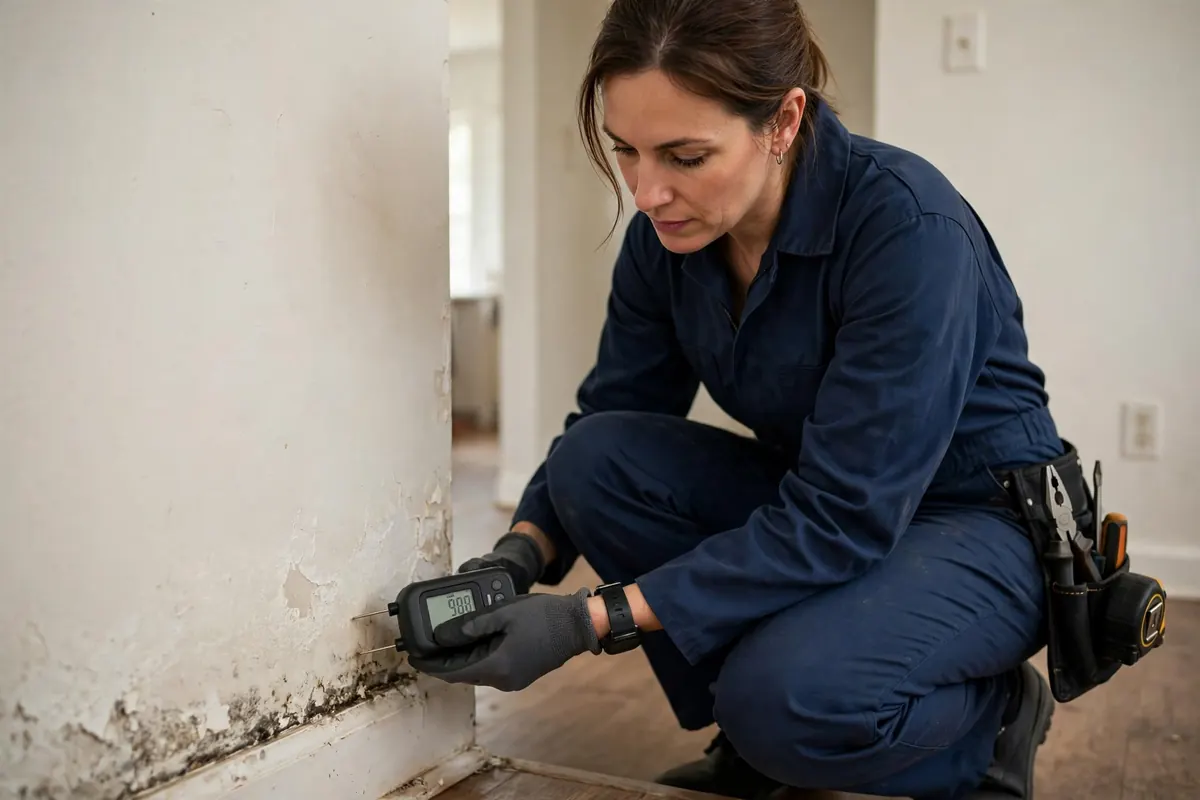
This is the decisive check for any unexplained moisture sign. If the meter moves with every fixture off, water is escaping somewhere in the system, and the smell has a supply line behind it. If the meter is still, look next at drains, traps, and air conditioner condensate as odor sources.
Look under every sink, behind the washing machine, and around the water heater for slow drips, and check the air conditioner condensate drain, a classic Florida odor source. A slab leak should be the conclusion after the visible plumbing is cleared, not before.
Bubbling paint, soft or swollen baseboard, and staining at floor level mark where moisture has been wicking upward. Photograph what you find. Those marks often outline the wettest wall, which helps aim the moisture mapping on a detection visit.
Boundaries: do not tear out drywall, baseboards, or flooring hunting for the source, because the smell travels and the loudest room is often downstream of the leak. If anyone in the home has breathing difficulties, limit their time in the strongest smelling rooms until the source is found. And treat a rotten egg or sewage odor as a different problem entirely: that can mean a drain or sewer failure, and it should be reported the same day, not monitored.
A mildew smell alone is rarely a midnight emergency, but call promptly if it arrives with visible mold spreading across a wall, with damp or wet flooring, or with a spinning meter. A sewage smell, as opposed to a musty one, always earns a same day call: it can signal a broken drain line under the slab. Call (941) 307-1712 and describe which smell you have; the answer changes the visit plan.
The visit starts by mapping moisture, not by chasing odor. Pin and pinless moisture meters read the water content of floors, baseboards, and lower walls across the home, building a map of where the structure is wet and where it is dry. The wettest zone, not the smelliest room, aims the next step. Pressure and isolation testing then confirm whether a supply line is losing water, separating a slab leak from a drain problem or an air conditioner condensate issue, which call for different trades entirely.
If a supply line is confirmed, acoustic and thermal detection pinpoint the break, and the repair follows the pipe's condition: a Slab Leak Spot Repair for a single failure, or Pipe Rerouting when the buried line is failing in more than one place. Our Water Leak Detection service covers the wall and ceiling sources the smell sometimes hides as well, and Slab Leak Detection handles the under-floor half of the search. Fixing the source is what makes the smell fixable; until the water stops, every cleaning is temporary.
Straight answers about this sign, before you call.
Describe the signs you are seeing and we will point you to the right next step.
Call (941) 307-1712Growth can begin within days on continuously damp material, and a noticeable musty smell often follows within a few weeks in Florida's warmth and humidity. The smell usually lags the leak itself, sometimes by months, because the colony has to grow large enough, and the air path to your nose has to open, before you notice it.
Either is possible, and the smell alone cannot tell them apart, because both feed the same hidden cavities. Moisture mapping separates them: a slab leak wets materials from the floor upward in a spreading footprint, while a wall leak wets a vertical trail from the pipe down. The map, not the nose, makes the call.
Mostly, yes, once the materials dry. Stopping the water removes the moisture supply, colonies go dormant, and the odor fades as the structure dries. Materials that stayed wet for a long time, especially carpet pad and the bottom of drywall, may hold the smell and need removal even after the plumbing is repaired. Drying first, then judging, is the right order.
A supply line slab leak smells musty, never like sewage, because the water in it is clean. A sewage odor points to the drain side: a cracked drain line under the slab, a dry trap, or a vent problem. That distinction is diagnostically valuable, so mention exactly which smell you have when you call; it changes which tests come first.
After the source is fixed and the structure is dry. Testing while water is still flowing only documents a problem that is still growing, and results change as conditions change. Find and stop the water first; then, if health concerns or a property transaction call for testing, the results will describe the home as it will actually stay.
Damp carpet and lifting laminate with no spill above them mean water rising from below.
Every major warning sign in one guide, and the order a technician checks them in.
Hidden water leaks in walls, ceilings, and yards traced to their exact source.
Slab leaks flooding your Bradenton home found and fixed fast, day or night.
A smell with no visible source usually has one under the floor. Call and we will map the moisture back to it.
Call (941) 307-1712