One guide to every major warning sign, what each one usually means, and the order to check them in before the damage spreads.
The most common signs of a slab leak are a warm patch of floor, a water meter that moves when nothing is running, the sound of water in a quiet house, a musty smell that will not leave, wet carpet, and new cracks in floors or walls. Any one of them earns a meter test. Two or more together mean call Bradenton Slab Leak Pros at (941) 307-1712 for detection.
Every sign on this page is surface evidence of the same hidden event: pressurized water escaping from a pipe buried under your concrete floor. Bradenton homes are almost all slab-on-grade, which means the supply lines run through or beneath the slab itself. When a line fails, the water has nowhere visible to go. It spreads along the top of the slab under your flooring, soaks into soil below, and warms, wets, or moves whatever sits above it. The sign you notice first depends on where the break is and which line it is on.
The lines themselves fail for understandable reasons. Copper thins from the inside after decades of mineral rich Manatee County water. Galvanized pipe in older Bradenton and Palmetto homes rusts until the wall gives way. Plastic fittings crack when sandy soil settles unevenly around them, and the high water table keeps the ground under slabs damp for much of the year, speeding corrosion. Rainy season adds stress: saturated soil swells and shifts, flexing pipes that dry ground held still.
Read the signs as a set, not as isolated annoyances. A hot line leak announces itself with warmth and a water heater that cycles too often. A cold line leak is quieter: it shows up on the meter and the bill first. A leak that has run for months starts moving soil, and that is when cracks and sticking doors join the list. Each sign also has its own guide, linked below, with the checks that separate a slab leak from an innocent lookalike.
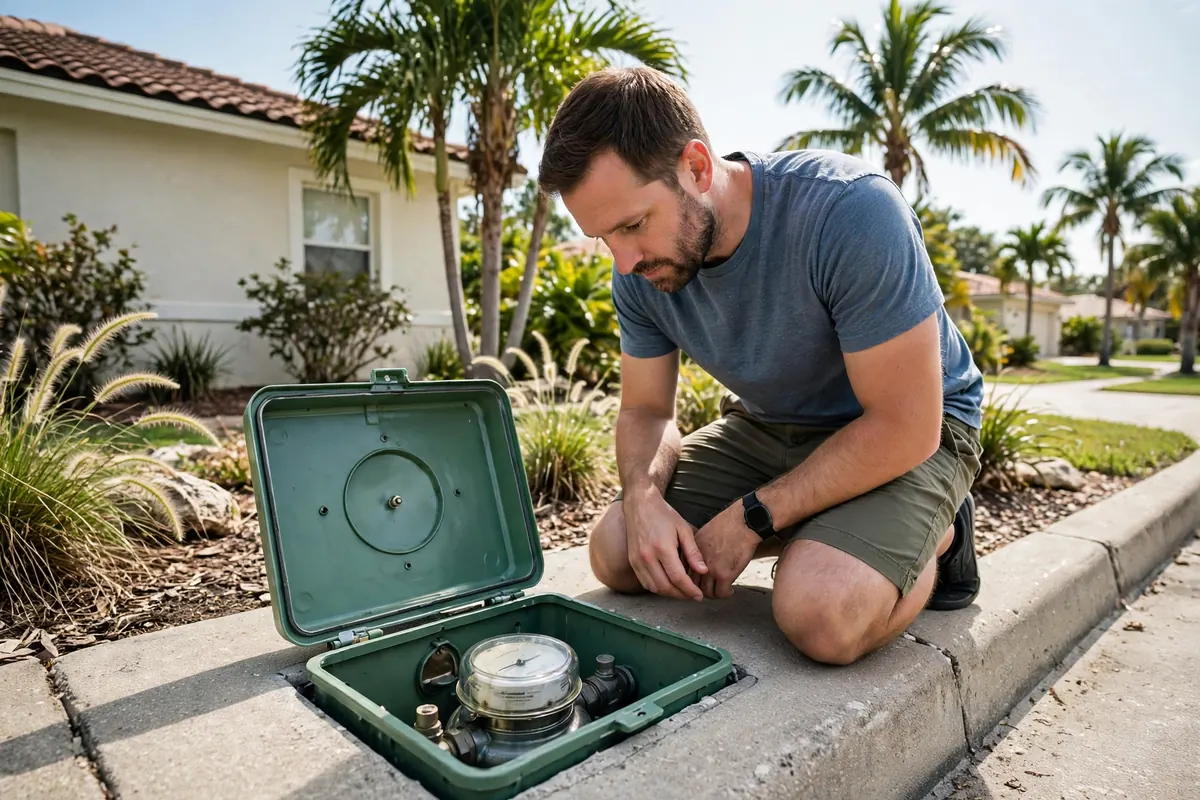
Four checks, in this order, will tell you whether you are looking at a real leak or a false alarm. None of them requires tools beyond a flashlight and your water meter.
Turn off every tap, appliance, and the irrigation controller. Read the meter, then watch the small leak indicator dial for two minutes. If it moves, water is leaving the system somewhere. Note the reading, wait an hour with nothing used, and read it again to gauge how fast.
Warmth concentrates over a leaking hot line, and damp or spongy spots gather where water pools under flooring. Walk slowly in the morning, when the house is coolest and a warm patch stands out most clearly against the rest of the floor.
Late at night, with the air conditioner and refrigerator quiet, stand near bathrooms and the water heater and listen for hissing or rushing. Sound that continues while nothing is running belongs to moving water, and moving water is going somewhere.
A slab leak raises usage steadily, while a visit from guests or a filled pool raises it once. A climbing trend across three bills, in a household whose habits have not changed, is one of the strongest early warnings there is.
What not to do: do not cut, drill, or lift flooring to look for the source yourself. Water surfaces far from where it escapes, so the wettest spot is rarely the leak, and opening the floor in the wrong place only adds repair work. The meter test result and your notes are the most useful things you can hand a technician.
Treat the signs as an emergency when water is actively pooling or rising, when a floor has started to buckle or lift, when water is anywhere near outlets, appliances, or the electrical panel, or when you smell sewage rather than mildew. Shut off the main water valve, keep people and pets off damaged flooring, and call (941) 307-1712 right away instead of waiting for a regular visit window.
A detection visit converts your list of signs into one marked spot on the floor. It starts with a pressure test that confirms a supply line is losing water, then isolation testing that separates the hot side from the cold side and the house lines from irrigation. That sequence rules out the lookalikes, toilets, softeners, pool equipment, and sprinkler lines, before anyone concludes the slab is involved. Our Slab Leak Detection service is built around exactly this order of proof.
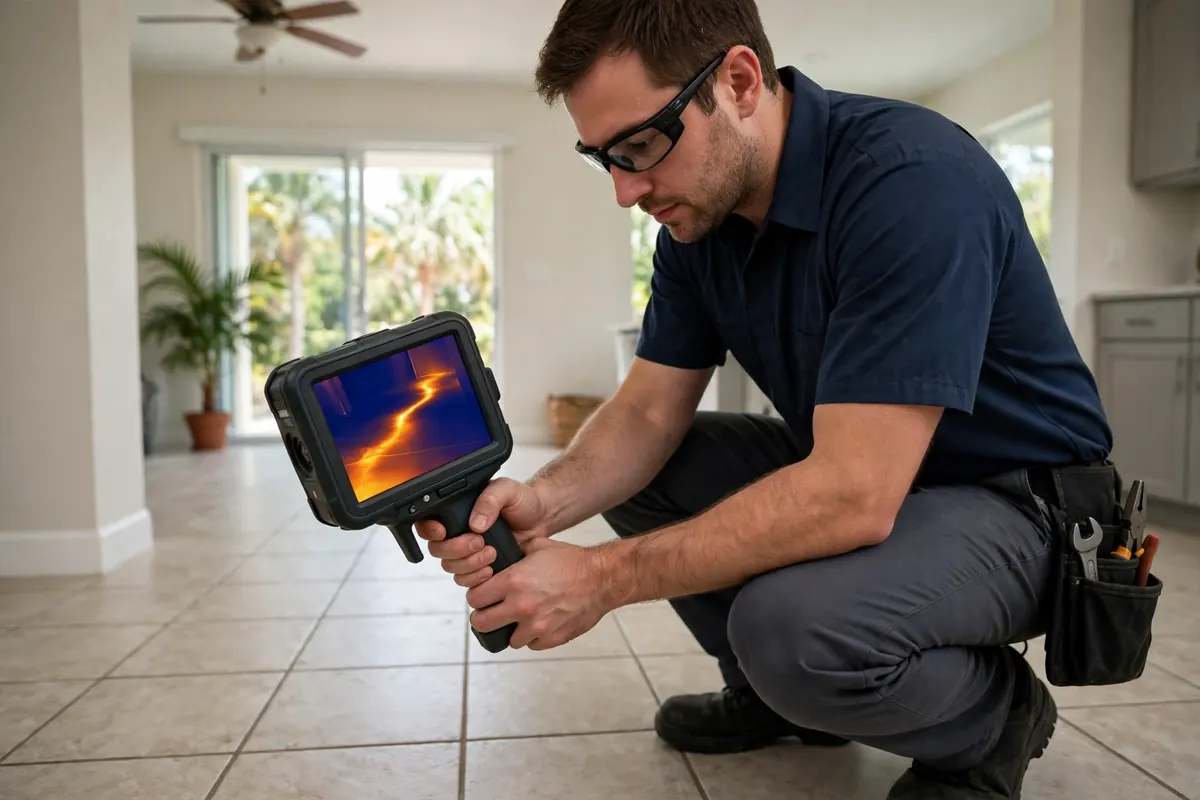
With the line identified, Electronic Leak Detection takes over: acoustic listening gear follows the sound of escaping water through the concrete, and thermal imaging traces the warm path of a hot line leak. The two methods cross check each other until the break is marked in a spot small enough to repair directly. You see the mark, the readings behind it, and the reasoning before any repair is discussed.
Then the fix is matched to what the pipe actually looks like. A single break in sound pipe points to a Slab Leak Spot Repair through one small opening. A line failing in several places points to Pipe Rerouting, which replaces the buried run with new pipe through walls and attic space. The signs got you here; the testing decides the ending.
Straight answers about this sign, before you call.
Describe the signs you are seeing and we will point you to the right next step.
Call (941) 307-1712A water meter that keeps moving when every fixture, appliance, and the irrigation system are off. Floors can feel warm for other reasons and bills can jump for innocent ones, but a meter that will not sit still means water is physically leaving the plumbing, and under-slab lines are the most common hidden place it goes in a Bradenton home.
Yes, especially early and especially on cold lines. A small cold line leak under the middle of a slab can run for weeks producing nothing but a slightly higher bill. That is why the meter test matters: it detects the leak directly instead of waiting for warmth, sound, or damage to announce it.
Warm floor patches and a water heater that fires far more often than it used to point to the hot side. A climbing bill, a moving meter, and running water sounds with no warmth anywhere point to the cold side. Damp carpet and cracks can come from either, which is why isolation testing separates the two before detection begins.
They can seem to come and go. A warm spot feels stronger in the morning, sounds vanish under daytime noise, and dampness can dry at the surface while the leak continues below. The leak itself never heals. Pressure, soil moisture, and temperature change how obvious it is, not whether it is there.
One clear sign is enough, and the meter test is the tiebreaker. If the meter moves with everything off, call regardless of what the floors feel like. Waiting for a second or third sign usually means waiting for water damage, because the later signs on this list are the ones caused by time.
A hot patch of tile almost always means a hot line leaking below. Here is how to read it.
Pipes that talk when the house is silent are telling you where to look first.
Under-slab leaks pinpointed with acoustic and thermal tools before any concrete is cut.
Slab leaks flooding your Bradenton home found and fixed fast, day or night.
One meter test settles the question. Call, describe the signs you are seeing, and we will plan the detection visit from there.
Call (941) 307-1712