A house with every tap closed should be silent. If the pipes keep talking, water is moving somewhere it should not be.
Hearing running water when every tap, appliance, and toilet is off usually means pressurized water is escaping somewhere, and under-slab supply lines are the most common hidden source in Bradenton homes. Silence the house, rule out toilets and irrigation, then run the meter test. If the meter moves, the sound is real and so is the leak. Call Bradenton Slab Leak Pros at (941) 307-1712 for acoustic detection.
Water sitting still in a pipe makes no sound. Water escaping through a split, a pinhole, or a failed joint is forced through a narrow opening at full household pressure, and that forced passage hisses, rushes, or roars depending on the size of the break. The sound does not stay at the break. It travels along the pipe itself, through the concrete, and up through walls and framing, which is why a leak under the kitchen can be audible in a bedroom wall on the other side of the house.
The character of the sound carries information. A faint, steady hiss usually means a small opening under high pressure, a pinhole in copper or a fitting weeping at its threads. A louder rushing or trickling that rises and falls can mean a bigger split, or water striking soil and gravel as it escapes. Sound near a bathroom that pulses in a rhythm often traces to a toilet rather than the slab, which is one reason the checks below matter before anyone concludes where the water is going.
Florida construction makes slab houses especially good at broadcasting these sounds. Slab-on-grade floors are one continuous piece of concrete in contact with the pipes, and concrete conducts vibration far better than air does. In Manatee County homes the effect is strongest on quiet nights during the dry season, when there is no air conditioner hum and no rain noise to mask it. Many homeowners first hear their leak at two in the morning and doubt themselves by breakfast. The sound was real.

Work through these in order, in a quiet house, and you will know within fifteen minutes whether the sound deserves a detection visit.
Pause the ice maker, and make sure the washing machine, dishwasher, water softener, and reverse osmosis system are not mid cycle. Several of these refill or regenerate on timers, often at night, and each one sounds exactly like running water because it is.
A worn flapper leaks water from tank to bowl silently at the fixture but audibly in the wall. Lift each tank lid and listen, then add a few drops of food coloring to the tank and check the bowl in fifteen minutes. Color in the bowl without a flush means that toilet is your sound.
Turn the irrigation controller off, not just to a skipped cycle. A stuck zone valve lets water run to the yard for hours and the pump or street pressure sound carries indoors. If the noise stops with irrigation off, the problem is outside the slab.
With everything off, watch the meter's leak indicator. If it moves while you hear the sound, water is escaping the plumbing system, and the slab lines move to the top of the suspect list. Note whether the sound and the dial agree; that pairing is powerful evidence.
Boundaries: do not open walls or cut into floors to listen closer, because sound travels and the loudest point is seldom the break. And one hard rule: if what you smell near the sound is gas, not water, leave the house and call the gas company from outside. Plumbing sounds are patient. Gas is not.
Call the same day if the sound is loud and constant, if it has grown noticeably louder over days, if water pressure drops while it runs, or if dampness or warmth appears anywhere on the floors. A sound that escalates usually means the opening in the pipe is enlarging. Shut off the main valve to quiet it, then call (941) 307-1712.
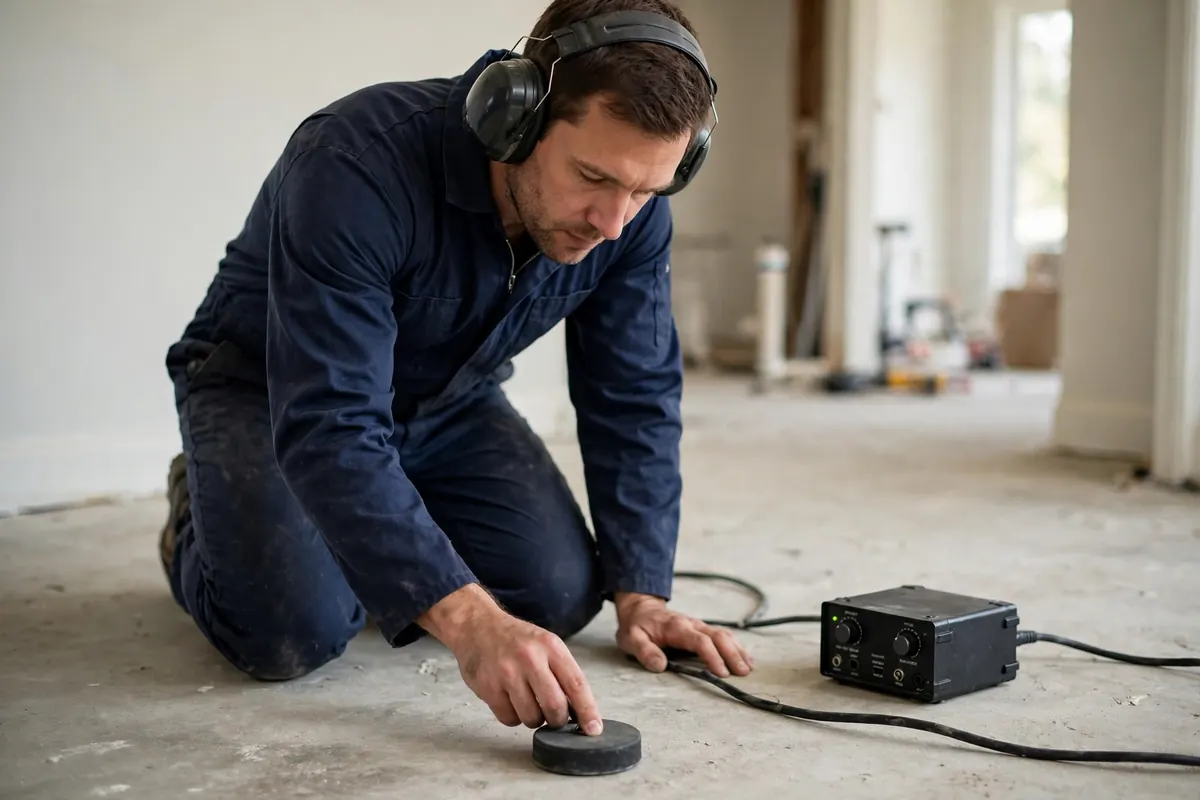
Acoustic detection is built for exactly this sign. A technician places ground microphones on the floor and listens along the suspected line, comparing volume from point to point: the sound peaks where the water escapes. On longer runs, correlation equipment times the sound arriving at two sensors and calculates the position between them. It is methodical, quiet work, and it ends with a mark on the floor backed by readings, not a guess. This is the core of our Electronic Leak Detection service.
Before the listening starts, isolation testing confirms the sound belongs to a house supply line and identifies which branch, so the search area is one line, not the whole home. Slab Leak Detection combines that isolation with the acoustic work. If the sound turns out to be an active, flooding failure, the same visit escalates to Emergency Slab Leak Repair containment first and repair planning second.
Straight answers about this sign, before you call.
Describe the signs you are seeing and we will point you to the right next step.
Call (941) 307-1712Because water is still moving through the system somewhere. The usual causes are a toilet flapper passing water, a softener or filter mid cycle, an irrigation valve stuck open, or a leak in a supply line. If the first three are ruled out and the meter moves, the remaining explanation is escaping water, and under-slab lines are the most common hidden route.
Yes, and it routinely does. Pipes and concrete conduct sound efficiently, so a leak under one room can be clearly audible at a wall across the house, sometimes louder there than at the source if a pipe run points that way. This is why detection compares readings across a grid of points instead of trusting the loudest wall.
Generally, yes. A hiss is water forcing through a very small opening at full pressure, a pinhole or a weeping joint. A rush or trickle suggests a larger opening or water striking soil after it escapes. Small sounds are not small problems, though: a pinhole hiss can run for months and move a great deal of soil.
It could. Softeners regenerate on a timer, usually in the early morning hours, and heaters make filling and expansion noises as they cycle. The test is timing and the meter: appliance sounds follow a schedule and stop, and a softener cycle eventually ends. A leak sound plus a moving meter, at random hours, points away from the appliances.
Nothing about the leak changes at night. The house changes: the air conditioner stops, traffic fades, and nobody is running water that would mask the hiss or confuse it with normal use. Night is also when municipal pressure often rises slightly with lower demand, which can make an escaping line marginally more audible.
Every major warning sign in one guide, and the order a technician checks them in.
A hot patch of tile almost always means a hot line leaking below. Here is how to read it.
Electronic listening and correlation equipment that hears the leaks your ears cannot.
Slab leaks flooding your Bradenton home found and fixed fast, day or night.
If the house is silent and the pipes are not, call and describe the sound. We will find where it starts.
Call (941) 307-1712