
A patch of tile that feels like it has a heating pad under it is rarely a mystery. It is usually hot water escaping below the slab.
A warm spot on the floor in a Bradenton home almost always means a hot water line is leaking under the slab. Escaping hot water heats the concrete, and the heat rises straight through tile and wood. The spot often follows the path of the pipe and feels strongest in the morning. A meter test confirms it, and Bradenton Slab Leak Pros can trace the warm trail to the break. Call (941) 307-1712.
Hot water lines carry water at well over a hundred degrees, day and night, whether anyone is using it or not. When one of those lines splits under a slab, the escaping water soaks the gravel bed and soil around the break, and the concrete above it becomes a slow, steady radiator. Tile and stone pass that heat to the surface efficiently, which is why a warm spot is so often first noticed by bare feet on a kitchen or bathroom floor. Wood and laminate warm too, though the heat spreads wider and feels softer through them.
The shape of the warm area tells a story. A round, intense spot suggests the break is right below it. A long warm trail, warm along a line and cooler to the sides, usually traces the pipe itself, heated by water traveling inside it and escaping along its run. Spots that grow week by week mean the soil around the leak is saturating and conducting heat further. In Manatee County slab-on-grade homes, hot lines often run under kitchens, bathrooms, and laundry rooms, so warm patches in those rooms deserve the fastest attention.
Two innocent causes are worth ruling out before you conclude anything. Sunlight through a south or west window warms a patch of floor in a pattern that moves with the time of day and vanishes on cloudy days. A refrigerator, dishwasher, or water heater can also warm the floor immediately around it. A leak spot ignores the weather and the clock: it is there at dawn, there at midnight, and there on the rainiest day of the season. That persistence is what separates it from every lookalike.
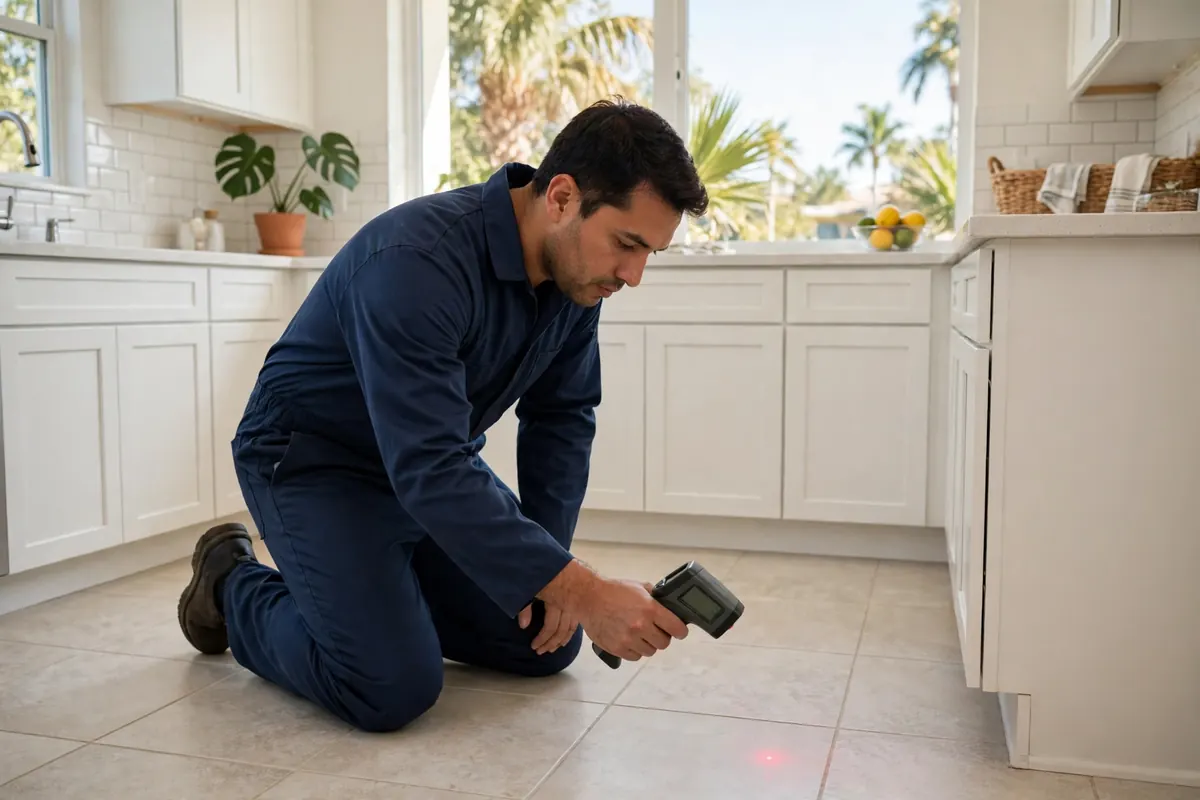
You can learn a lot about a warm spot with nothing but your feet, a clock, and the water meter.
Walk the area slowly first thing in the morning and again late in the evening. Note where the warmth starts and stops, and whether it follows a line. A leak pattern stays fixed to the pipe run. A sun pattern will have moved or disappeared.
A leaking hot line makes the water heater refill and reheat constantly. If the burner or elements cycle when nobody has used hot water for hours, the heater is replacing water that went somewhere. That somewhere is often under the slab.
With every fixture off and irrigation shut down, watch the meter's leak indicator for two minutes. Movement confirms water is escaping. If your home has a hot side isolation valve, a technician can separate the sides on the visit, but the basic test already tells you a leak exists.
A room over a hot line leak often feels slightly warmer and more humid than the rest of the house, and mirrors in that bathroom may fog without a shower running. Small clues, but they corroborate what your feet found.
Boundaries: do not pull up tile, wood, or laminate to investigate, because the surface point of the warmth is not always the break point, and lifted flooring cannot always be relaid. If the floor is hot enough to feel uncomfortable through shoes, or the warm area is spreading daily, skip the remaining checks, shut off the water heater's supply if you know how, and call.
A warm spot becomes urgent when the floor is uncomfortably hot, when you also hear running water, when water pressure drops suddenly, or when flooring over the warm area starts to lift or discolor. Those combinations mean a significant hot line failure. Shut off the main water, and call (941) 307-1712 the same day rather than monitoring it another night.
A warm spot is the one slab leak sign that comes with its own map. Thermal imaging reads the temperature pattern across the whole floor and draws the trail the hot water is taking, which usually leads back along the pipe to the break itself. Our Electronic Leak Detection service pairs that thermal picture with acoustic listening, so the marked spot rests on two kinds of evidence, not one.
Once the break is marked, the repair depends on the condition of the hot line as a whole. A single failure in otherwise healthy copper is a candidate for a Slab Leak Spot Repair through one small opening. Hot lines that have thinned along their length, common in 1960s and 1970s Bradenton ranch homes, often make a stronger case for Pipe Rerouting, which retires the buried hot run entirely and replaces it overhead. General Slab Leak Detection confirms which situation your home is in before anyone recommends either.
Straight answers about this sign, before you call.
Describe the signs you are seeing and we will point you to the right next step.
Call (941) 307-1712The break itself does not move, but the water does. As escaping hot water saturates more soil and gravel around the pipe, the warmed area of concrete widens, and the hottest point can appear to drift along the pipe run. A growing warm area is a leak that has been running longer, not a leak that is traveling.
Yes. Sunlight through glass, a running refrigerator motor, a dishwasher, and in rare cases a hot appliance drain line can all warm a patch of floor. The difference is pattern and persistence: innocent warmth follows the sun or the appliance schedule, while leak warmth sits on the pipe path around the clock, in all weather.
Almost always. Cold water under a Florida slab sits near ground temperature and cannot heat concrete noticeably. If the floor is warm, the hot side is the suspect, which is useful information: it halves the system the technician has to test and often explains a water heater that cycles too often.
Overnight, the house cools, floors lose the day's ambient warmth, and nobody is drawing hot water, so the heater keeps the line at full temperature for hours. The contrast between the cool surrounding floor and the heated patch peaks. By afternoon, sun and activity warm everything and the spot can feel deceptively faint.
They can, and often do. A leak under a bedroom rug, a couch, or a kitchen runner may only announce itself through the water bill, because nobody walks there barefoot and the covering insulates the surface. If the bill climbs and the open floors feel normal, lift the rugs and check underneath them before concluding anything.
Every major warning sign in one guide, and the order a technician checks them in.
Damp carpet and lifting laminate with no spill above them mean water rising from below.
Electronic listening and correlation equipment that hears the leaks your ears cannot.
Slab leaks flooding your Bradenton home found and fixed fast, day or night.
Heat under the tile means water on the move below it. Call and we will trace the warm trail back to the break.
Call (941) 307-1712