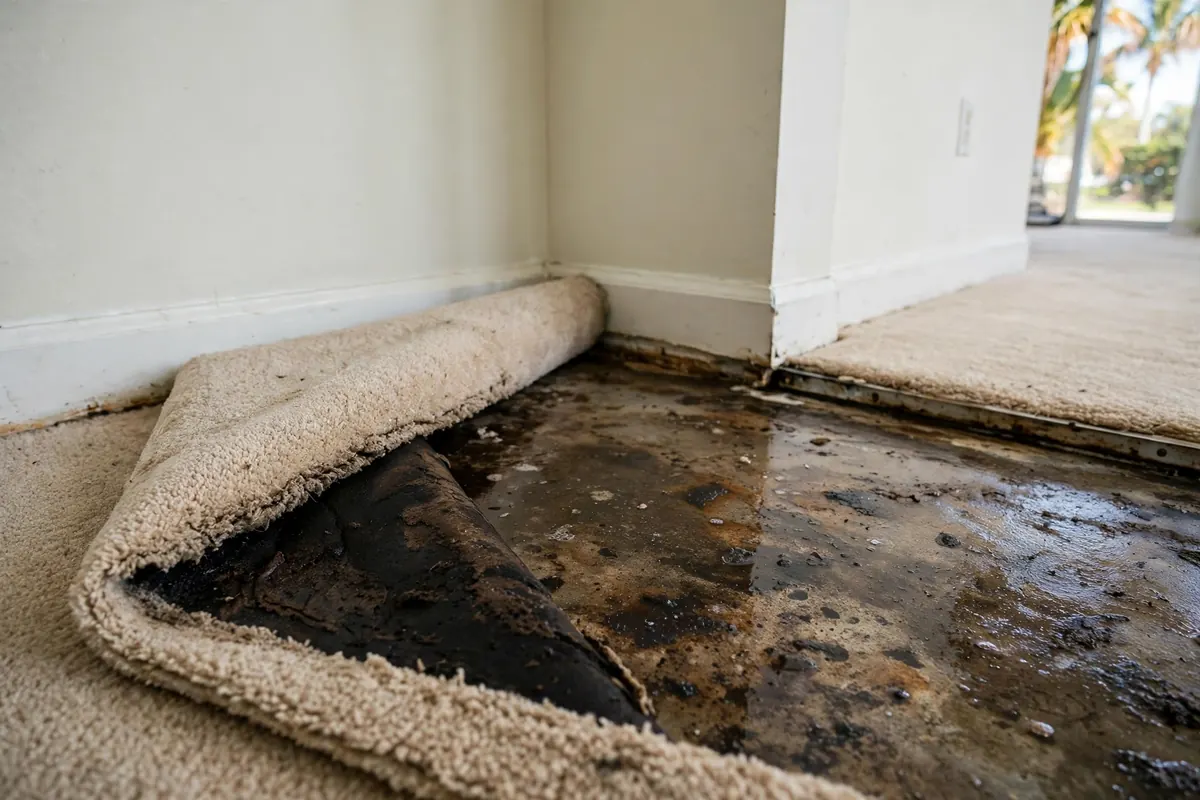
Flooring that is wet with no spill, no flood, and no rain to blame is receiving water from somewhere. Under a Florida slab is the first place to suspect.
Wet carpet, spongy laminate, or damp flooring with no spill above it usually means water is rising from below, and a slab leak is the most common source in Bradenton's slab-on-grade homes. Water spreads across the slab under the flooring, so the wet room is not always the source room. Rule out appliances, run the meter test, and call Bradenton Slab Leak Pros at (941) 307-1712 if the meter moves.
Water escaping under a slab takes the easiest path, usually sideways. It spreads through the gravel bed and across the top of the concrete, traveling under flooring until it finds a low point, a seam, or a material thirsty enough to wick it upward. Carpet pad is exactly that material: it acts like a sponge laid over the whole room, pulling water far from the source and presenting it at the surface wherever the pad saturates first. That is why the wettest corner of a bedroom can sit ten feet from the break that caused it.
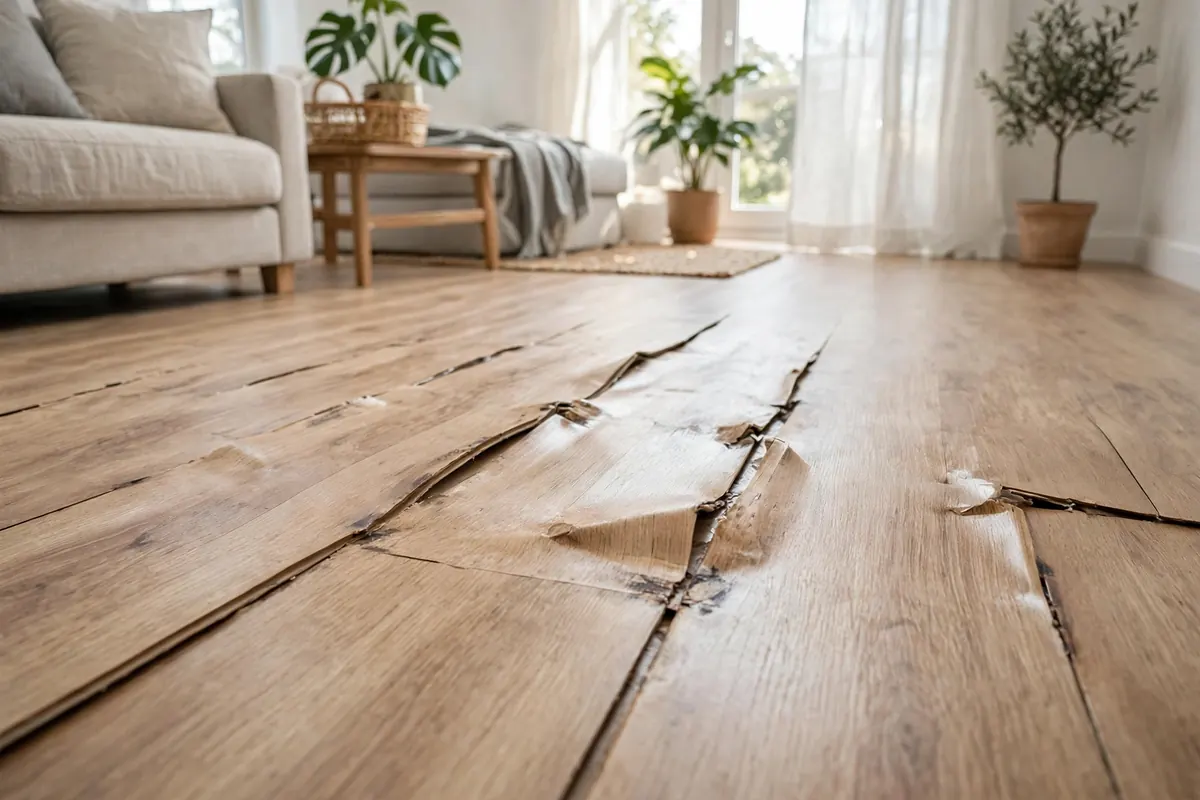
Different floors report the same water differently. Laminate and engineered wood drink moisture from below and answer with swelling, cupping, and seams that peak or open. Luxury vinyl resists water but traps it underneath, feeding odor and softening adhesive. Tile feels cold and damp, and eventually loosens as its setting bed stays wet; grout lines darken along the water's path. Each material is describing the same event in its own language, and none of them names the room where the pipe actually failed.
The Florida setting widens the spread. Slab-on-grade homes have no crawl space to catch or reveal the water, the soil below is sand that moves moisture readily, and the high water table means the ground under the slab is often damp before a leak adds anything. During rainy season, a small leak can present as a large wet area simply because the slab's surroundings are already saturated and the water has nowhere to drain. Homeowners regularly assume the wettest room holds the problem. The map, when we draw it, usually disagrees.
Work quickly but in this order: rule out the sources above the floor before concluding the water came from below it.
Check the refrigerator ice maker line, dishwasher connections, washing machine hoses, water heater pan, and the air conditioner condensate drain. In Florida, a clogged condensate line soaks more floors than almost anything else. If one of these is wet at its connection, you may have found your source without involving the slab.
With all fixtures and appliances off and irrigation shut down, watch the meter's leak indicator. Movement means the pressurized system is losing water, which no condensate or spill can explain. A still meter with wet floors points back toward drains, condensate, or weather intrusion.
Mark the boundary of the damp area on the floor and note the time. Check it in a few hours. A growing boundary with no water use in the house means an active supply below. A static or shrinking boundary suggests a one time event above the floor. This simple map is gold for a detection crew.
Lift furniture legs onto blocks or foil, pull rugs off wet areas, and move boxes and electronics off the floor. Do this before you finish the other checks. Water that is still spreading will not wait for the diagnosis to damage what sits in it.
Boundaries: resist pulling up large areas of flooring to look underneath before the moisture is mapped, because the surface pattern is evidence and disturbed floors are harder to read. Never break or drill the concrete looking for the source. And if standing water is anywhere near outlets, power strips, or appliances, keep clear of that area and say so when you call; water and electricity set the safety rules, not the schedule.
Wet flooring is an emergency when water is actively spreading, when it reaches walls and baseboards across more than one room, when it contacts anything electrical, or when it smells of sewage, which suggests a drain line failure rather than a supply leak. Buckled flooring is also a trip hazard in the dark. Shut off the main water for supply side flooding, and call (941) 307-1712 the same day.
A detection visit for wet flooring starts with a moisture map of the whole home, not just the wet room. Meter readings across floors and lower walls draw the true footprint of the water, which almost always extends further than the visible dampness and frequently peaks somewhere unexpected. That map aims the acoustic and thermal detection that follows, and it also tells you honestly which materials have been wet long enough to matter. Our Slab Leak Detection service is built around this sequence.
The source, once pinpointed, is repaired by the method the pipe's condition supports: a direct Slab Leak Spot Repair for a single break, or Pipe Rerouting when the buried line has failed in several places. If the investigation clears the slab and points above it instead, Water Leak Detection covers the wall, ceiling, and fixture sources. Either way, you end with a source that is found and fixed, a tested system, and a moisture map that guides whatever drying the home still needs.
Straight answers about this sign, before you call.
Describe the signs you are seeing and we will point you to the right next step.
Call (941) 307-1712Because carpet pad spreads water unevenly. Water travels under the flooring until it reaches a low point, a seam in the pad, or a spot where the pad's absorbency pulls it to the surface first. The corner is where the water arrived at the top, not where it entered from below, and the two are often in different rooms.
Yes. Water spreading across the top of the slab meets carpet pad long before it reaches a wall, and a leak near the middle of a room may saturate a wide circle of flooring without ever touching drywall. Wall dampness usually appears when the source is near the slab edge or when the leak has run long enough to widen its footprint to the room's perimeter.
A small corner lift to confirm wet pad is reasonable and will not hurt anything. Pulling up whole rooms is not: the moisture pattern across the intact floor is diagnostic evidence, and a detection crew reads it faster and more accurately than a disturbed floor allows. Photograph the wet areas, mark the edges, and leave the lifting to the visit.
Carpet can often be dried in place once the source stops. Pad is less forgiving: it holds water against the slab, dries slowly, and is where odor takes hold. Whether it can be saved depends on how long it stayed wet. Fans and dehumidification started right after the repair give both layers their best chance.
Three clues separate them. A from-below wet area grows with no water use in the house, often feels warm or smells musty at the baseboards, and the meter moves while everything is off. A spill sits where it landed, shrinks as it dries, and leaves the meter still. When clues disagree, the meter is the tiebreaker.
A musty smell that survives every cleaning usually has a water source under the floor.
When escaping water moves the soil, the concrete answers with cracks. Leak or settling?
Under-slab leaks pinpointed with acoustic and thermal tools before any concrete is cut.
Slab leaks flooding your Bradenton home found and fixed fast, day or night.
Water rising from below does not stop on its own. Call and we will map it back to the source under the slab.
Call (941) 307-1712